
Neo-Roman mosaic: an antique order, a story of today
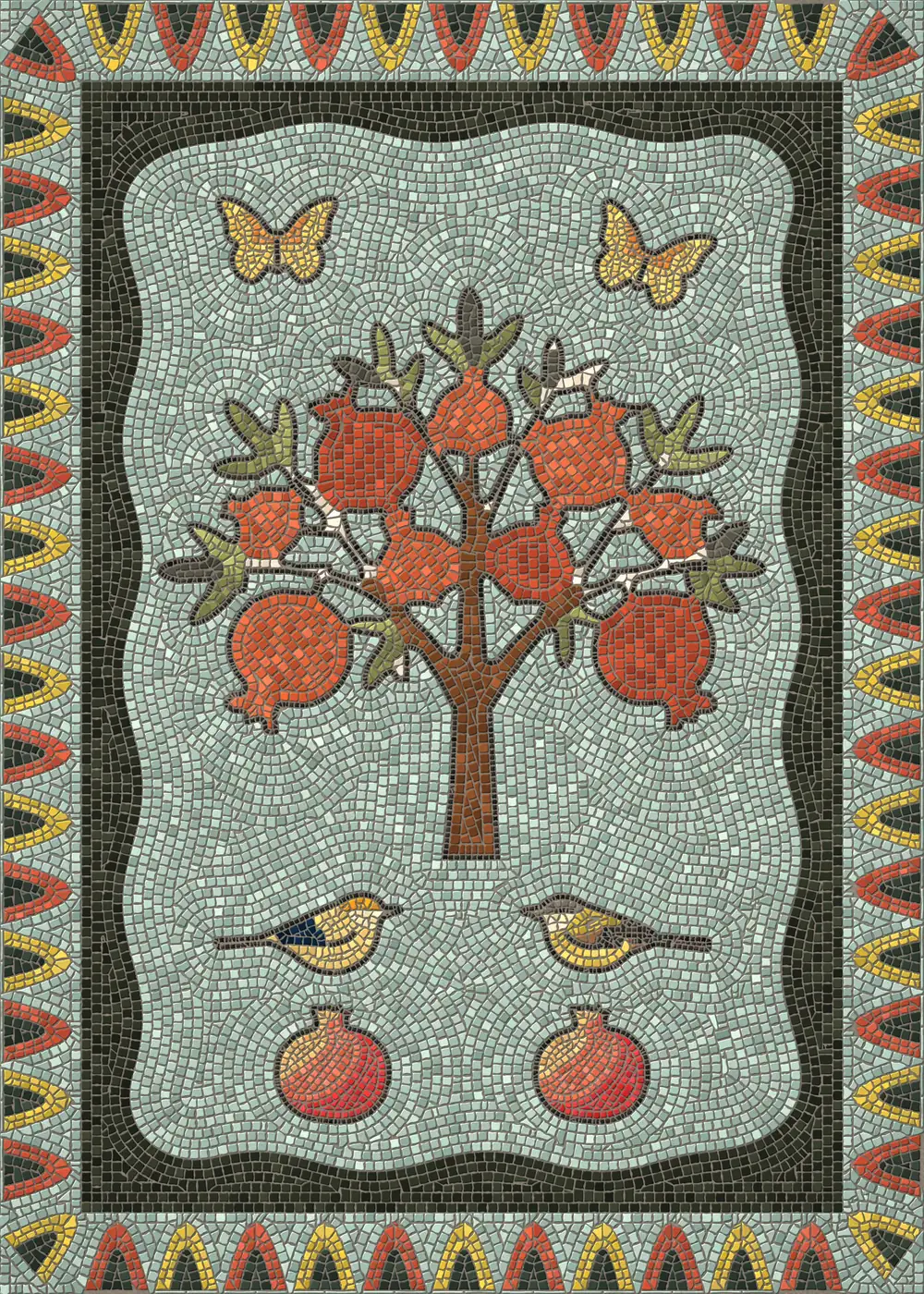
A panel in the Roman scheme — a frame of ornaments, fine lines, a light field, figures and lettering — but with a story, colours and some ornaments of today. On a floor in stone or on a wall in smalti.
The style · Up close · CAVE CANEM · Frame and medallion · Frame · Layouts · Colour · How it is made · Borders

The style
Neo-Roman mosaic takes its order from the antique floor — the frame, the lines, the calm field — and fills it with a story of today. The result looks as if it had always been there, yet it tells of your home, your courtyard, your business.
- On a floor — in stone, in a muted palette.
- On a wall — in smalti, brighter and freer.
- Alongside the other cases: the “unswept floor” is an antique subject, the doormat is lettering and a sign, “Patterns and laying” is geometry.
Up close: every tile is visible
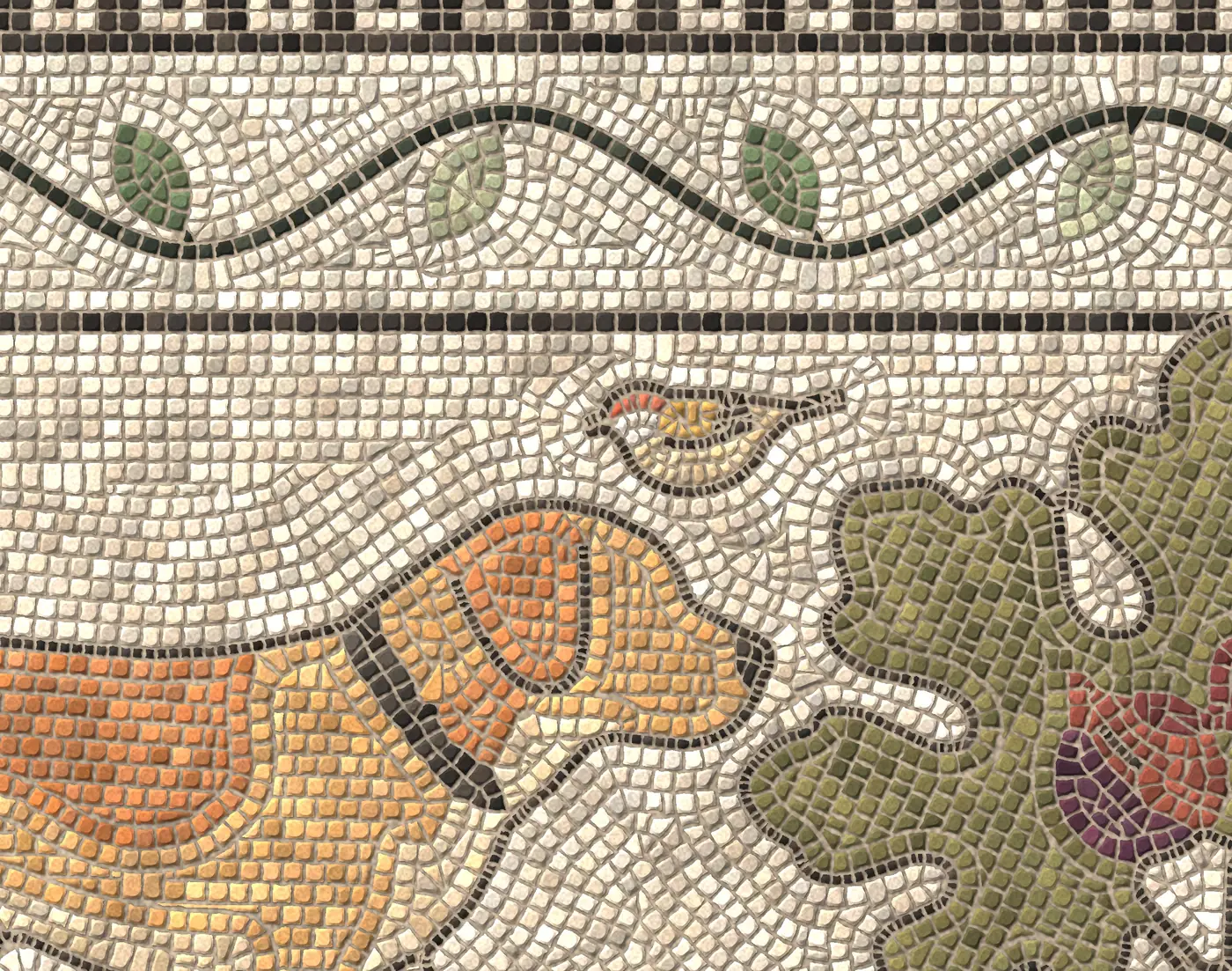
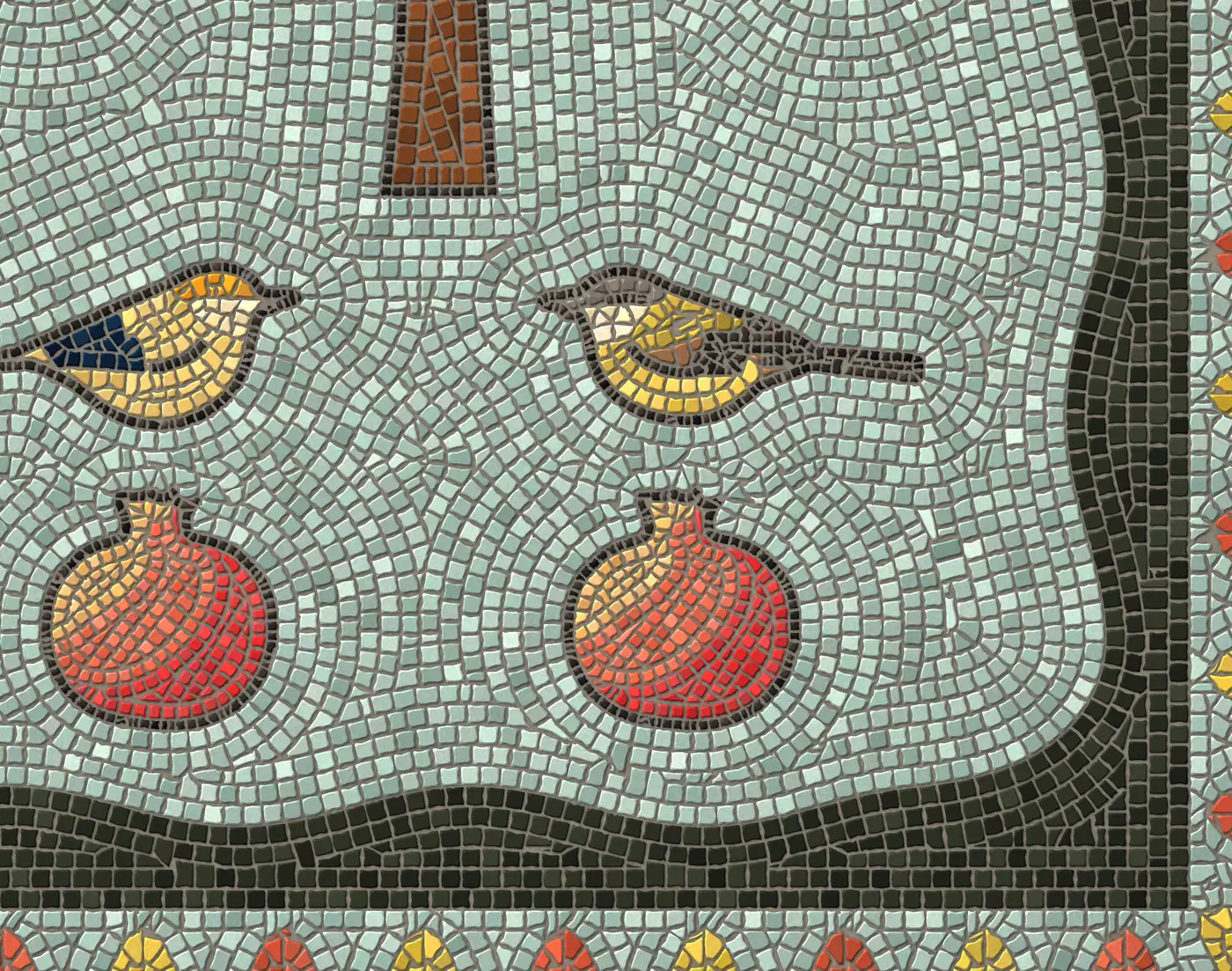
66 × 52 cm details of the same works. A figure’s outline is one tile wide, the background rows follow the figures, the lettering and the frame lines run in straight rows.
The same story, a different frame
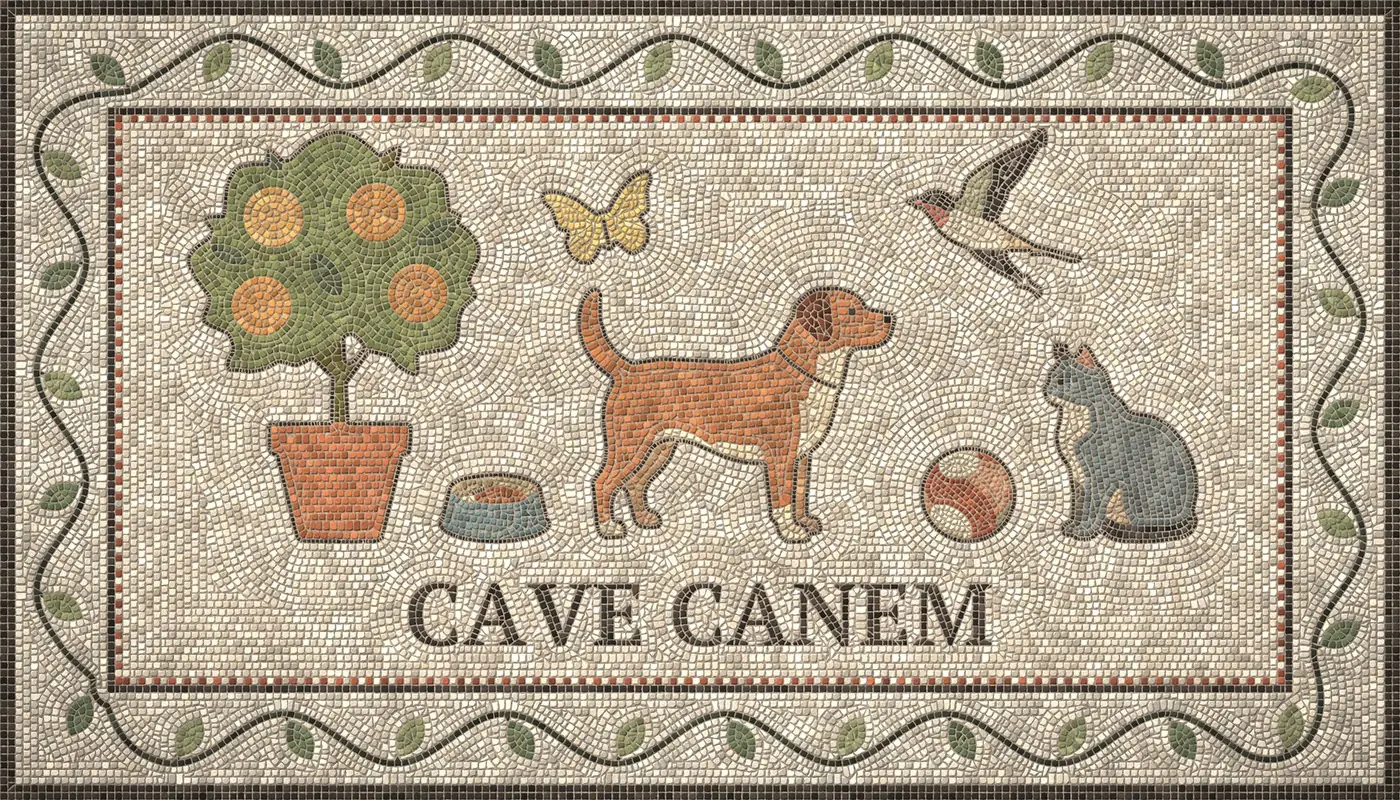
The courtyard with a dog read more strictly: the figures stand in a row, as in a frieze, the frame is ivy between dark lines with a terracotta dotted line, and the inscription is in Latin.
Frame and medallion: strict and modern
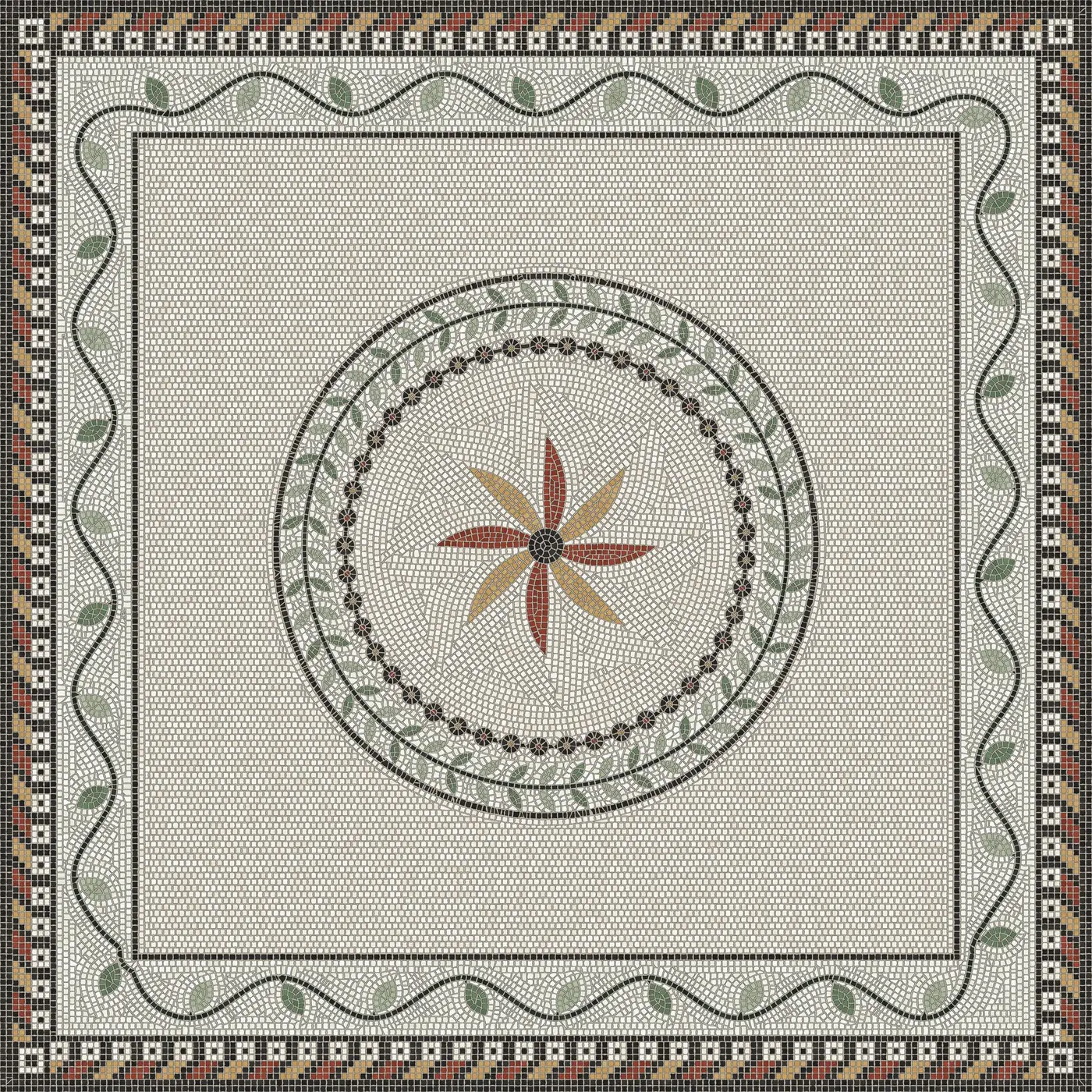
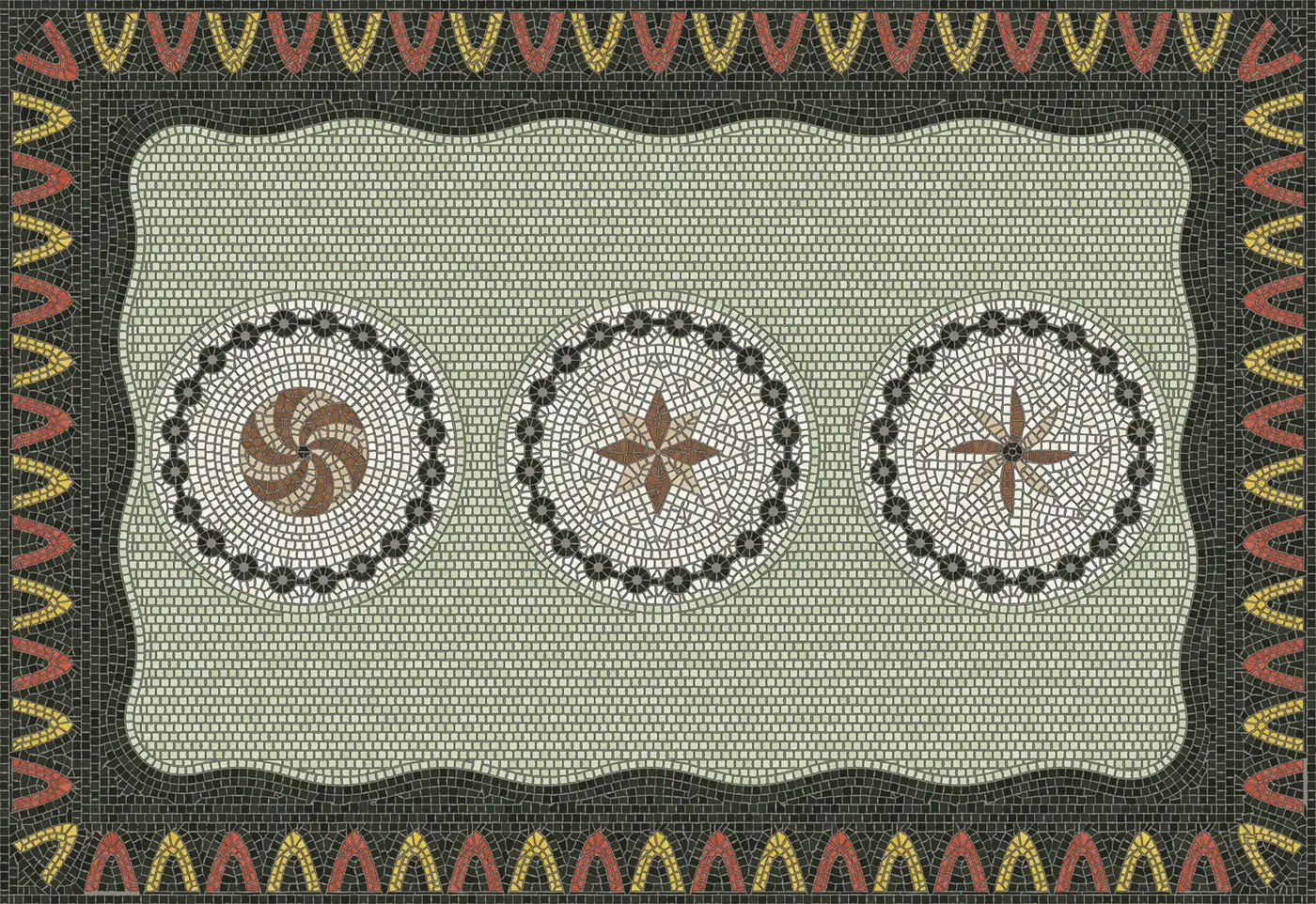
The same order — frame, lines, field, medallion — read two ways. Flat mosaic sheets from Studio; every tile is visible.
How to build the frame
Two or three bands
A frame is not one ornament but two or three bands: one wide, one thin.
Fine dark lines
Each band sits between fine dark lines, and a light row of “air” separates the frame from the field.
Colours from the picture
The frame repeats the colours of the picture in the field.
Composition layouts
The layout is chosen by the format and by what matters most.
Carpet
A frame of several bands with a scene in the field — the main floor layout.
Frieze
Figures walk in one direction with trees at the ends. A long corridor, a wall above a bench.
Ring medallion
A scene in a circle with rings of borders around it. The centre of a hall, the bottom of a pool.
Panel grid
Each panel holds its own picture inside a shared frame.
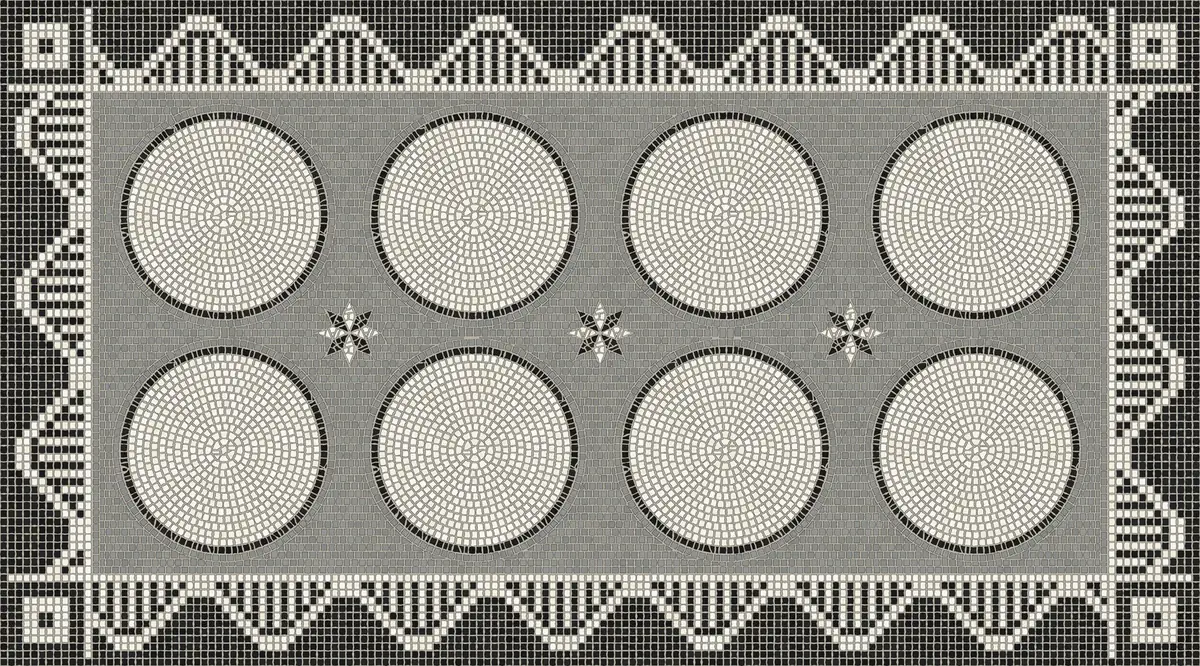
Medallion grid
Rows of circles with small stars between them: portraits, crests.
Honeycomb
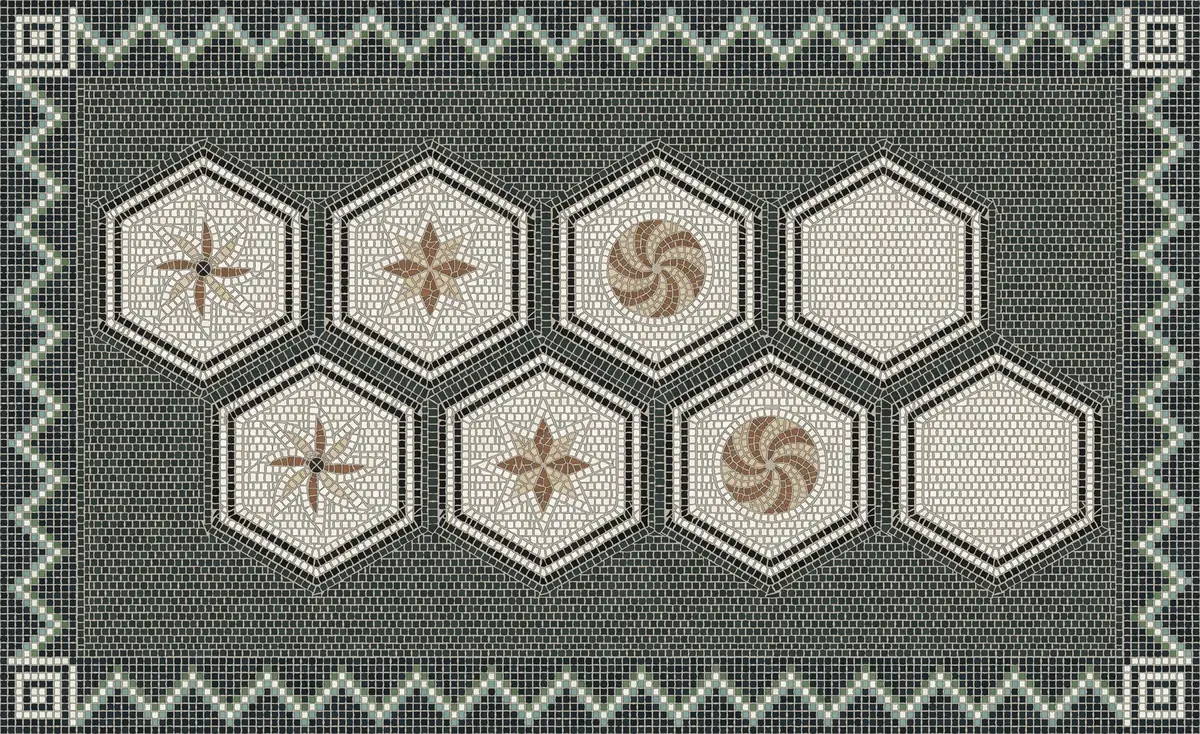
Hexagonal panels in offset rows: an alphabet, a collection. A modern layout.
Diamonds in a row
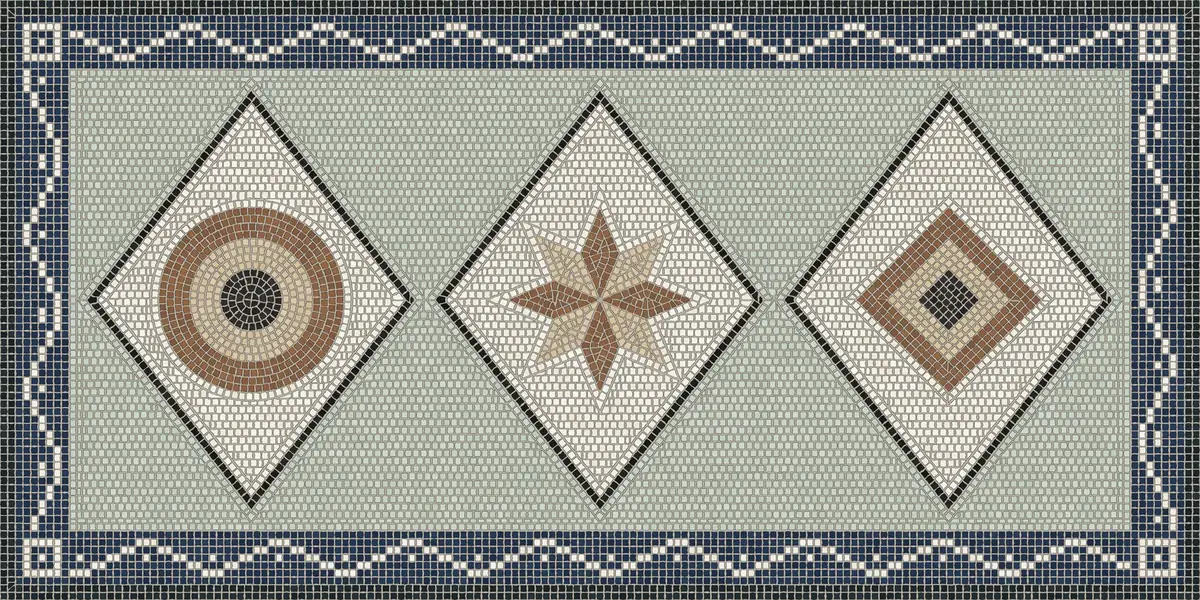
Each diamond holds its own picture. A modern layout.
Colour
- The field takes two thirds of the area and is never flat: three or four close tones mixed together.
- The dark line is not black.
- Two or three colours of the picture repeat in the frame and in the figures.
- One bright “spark”.
Colour schemes in Studio
Stone: Pompeian, black and white, limestone, slate, olive, pink marble.
Smalti: sea, sky, garnet, forest, turquoise, circus, night city, garden.
How such a panel comes together
This is how the works on this page were made.
Format and layout
Floor or wall, size, layout: a carpet with a scene, a frieze, a medallion, panels. The layout decides where the main subject goes.
Frame
Two or three bands from the border library and a colour scheme: Pompeian and olive for stone, garnet and forest for smalti.
Figures in words
“A dog in profile walking right”, “a pomegranate tree”. Studio draws each figure and shows how it will be laid in tiles; a weak one is redrawn.
Composition plan
Figures, lettering and frame on one sheet: one main subject, smaller secondary ones, small details filling the gaps, a ground line under the animals.
Mosaic and documents
The whole work in tiles, a project sheet with colour groups in m² and kg, and a large detail where every tile is visible.
Borders: classic and modern
Every border in Studio carries an era mark. Classic: the device appears in antique floors and suits strictly antique work — diamond chain, cubes, ivy, laurel, beads, dotted line. Modern: not found in antique floors, used when “pure antiquity” is not the goal — snake, chevron, rhythm, surf, petals, wavy edge.
All borders with pictures — in the “Patterns and laying” reference →
ANDAMENTO Studio opens soon
Leave your email and we will write once, on opening day.