
Patterns and laying: field, border, figures
A catalogue of the patterns already worked out in Studio: how the field is laid, which borders there are, which figures go in the centre — and how a Roman geometric floor comes together from them. The catalogue grows: a new pattern means a new card.
Field · Border · Figures · How a floor comes together · Villa map · Recommendations · Not yet
How the field is laid
The field is divided into whole cells — no cut cells at the edge. Around a picture or lettering the background first follows the outline for one or two rows, then the pattern starts. The pattern can be rotated.

Rows
Even rows with an offset, like brickwork.
Where it fits: A calm field under a picture or lettering; any size.

Matrix
An even grid, tile under tile.
Where it fits: A modern, “pixel” look; a background for crisp graphics.
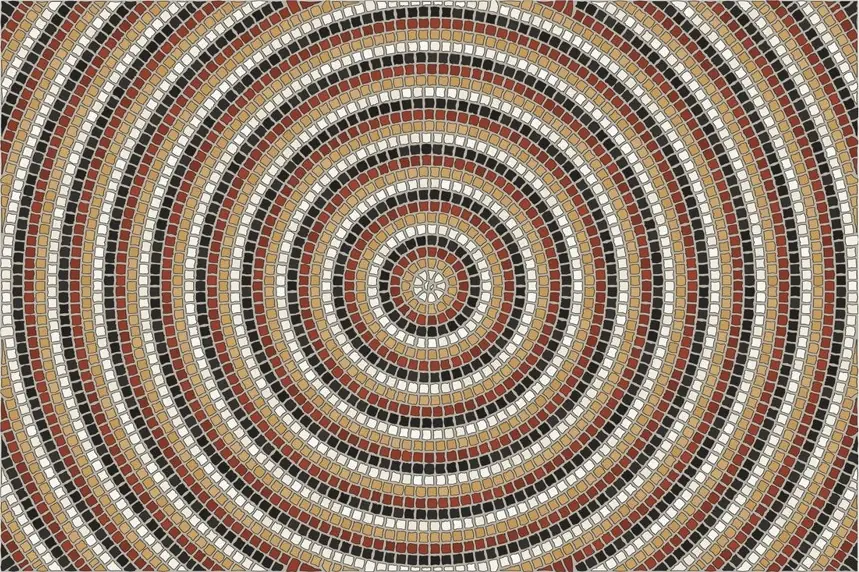
Circles
Rings from the centre.
Where it fits: A round floor, a medallion, a field under one central figure.
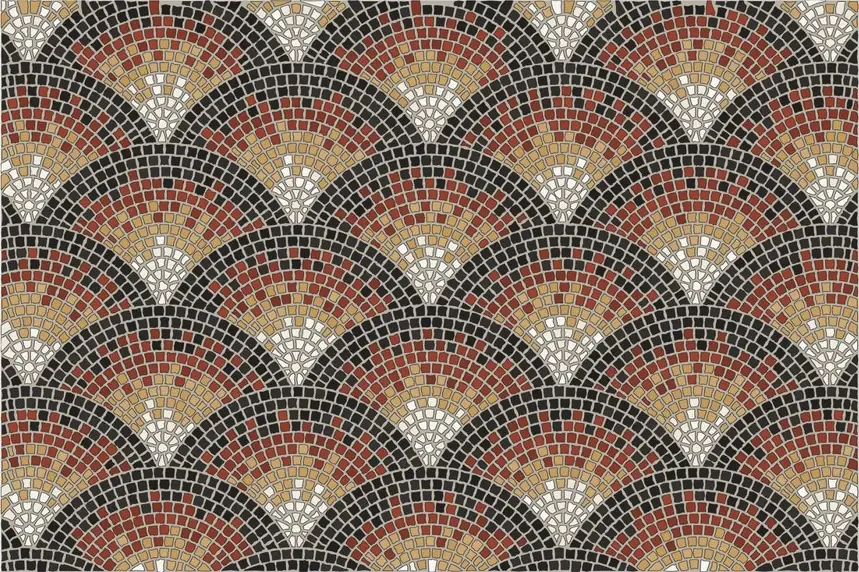
Fan
Rows of fans — a classic of formal floors and pools.
Where it fits: A large field from 1.5 m; in one colour or in four with a smooth transition.
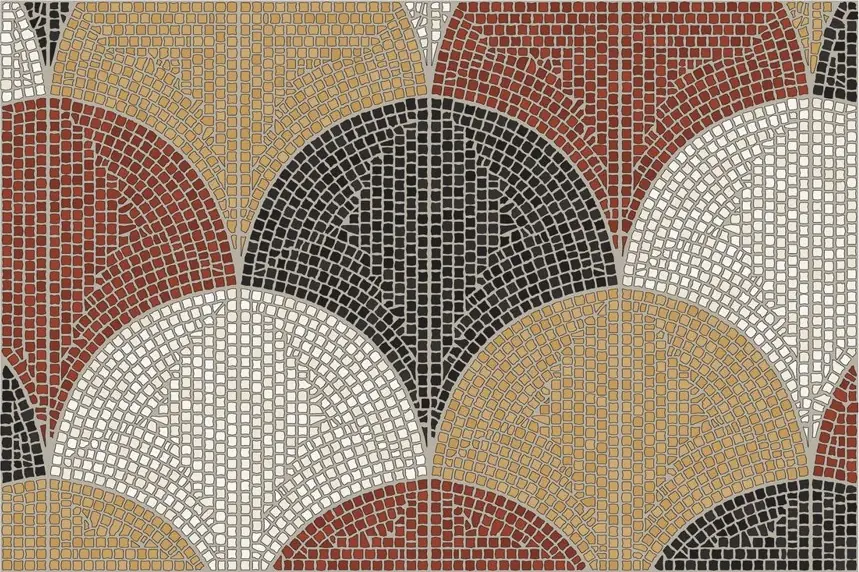
Scales
A field of scale cells in four colours. Filled whole or in halves, see below.
Where it fits: A colourful field with no picture; from 1 m.
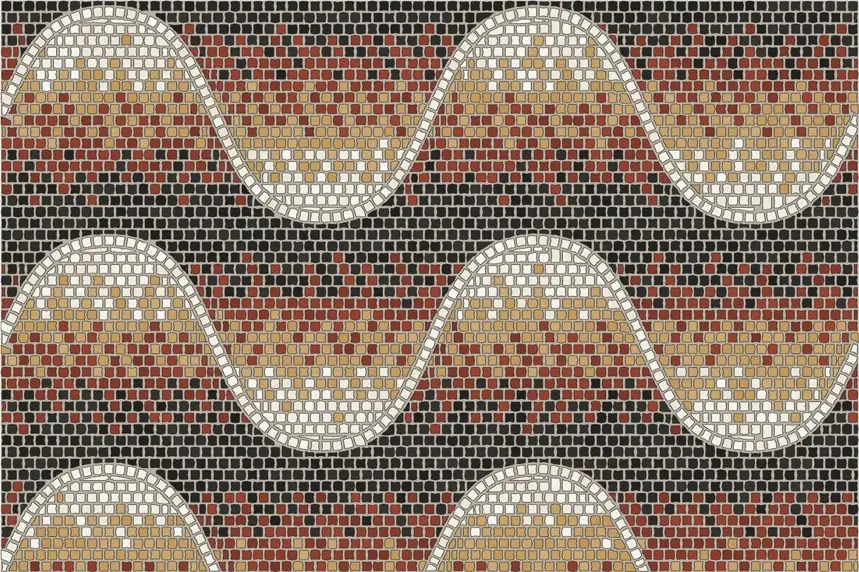
Wave
Bands with a wave line and a tone transition.
Where it fits: A “sea” field; the wave reads from 20 rows of tiles.
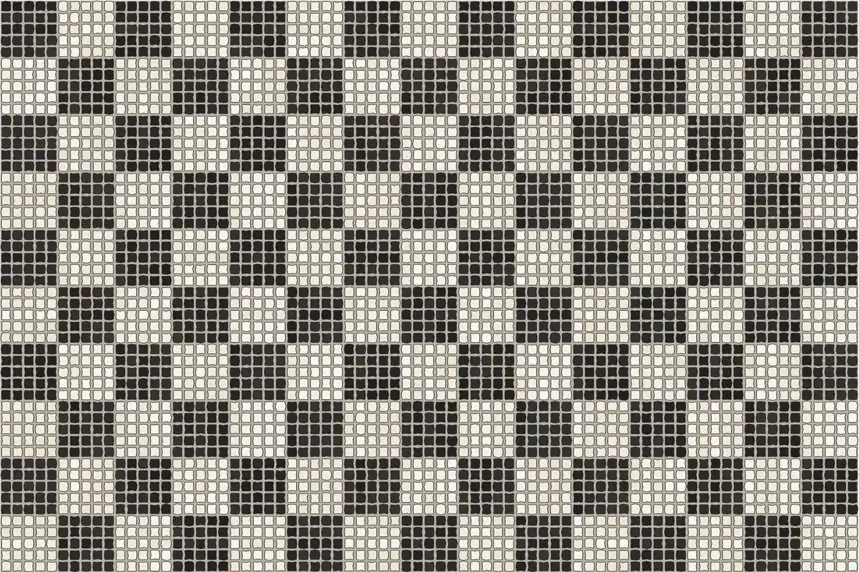
Chequerboard
Squares in two colours.
Where it fits: A classic geometric floor; a square of 5–8 tiles.
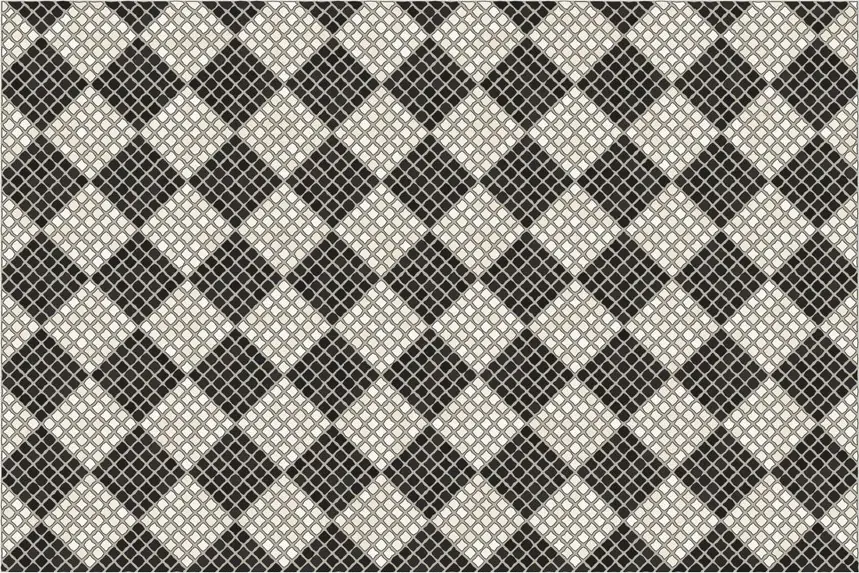
Diamonds
The same squares on the diagonal, tiles laid at 45°.
Where it fits: Dressier than a chequerboard; corridors and lobbies.
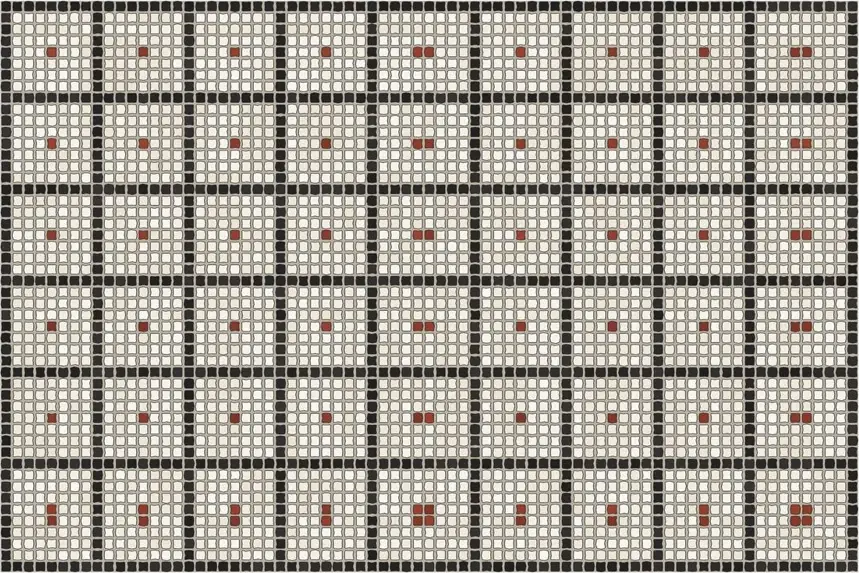
Lattice
Lines in a grid with a dot in the middle of each square.
Where it fits: A light floor with a fine pattern; a square from 8 tiles.
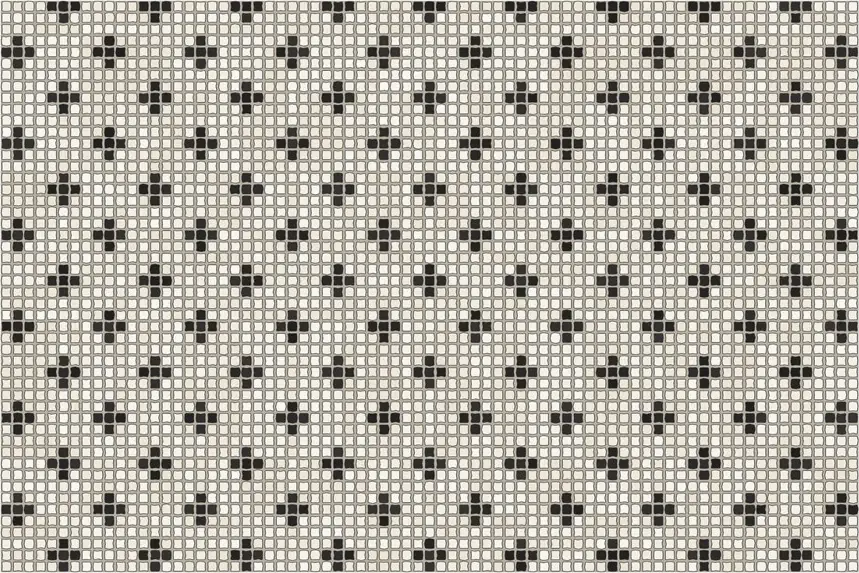
Crosses
A light field with small crosses in a staggered order.
Where it fits: The calmest Roman floor; under a medallion.
Scales: whole or in halves
Scales come with two fills, and the tile laying is the same in both — only the colour changes. Whole: each scale is one colour, the field reads as rows of coloured arches and resembles a fan. In halves: the left and right halves of each scale differ in colour, matching colours line up on the diagonal — the same four colours give a different, more graphic pattern.
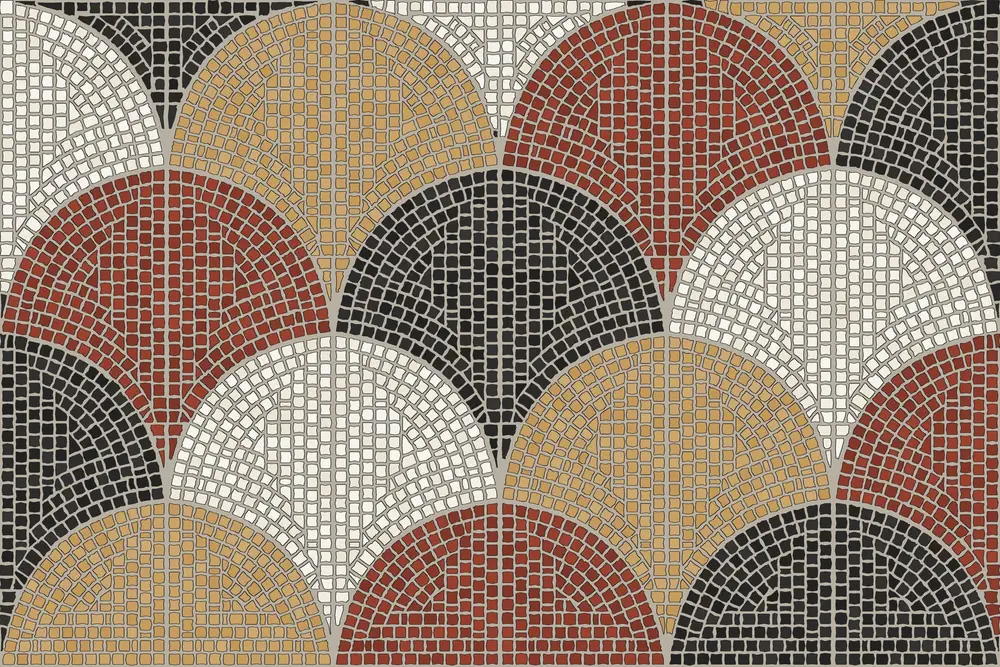
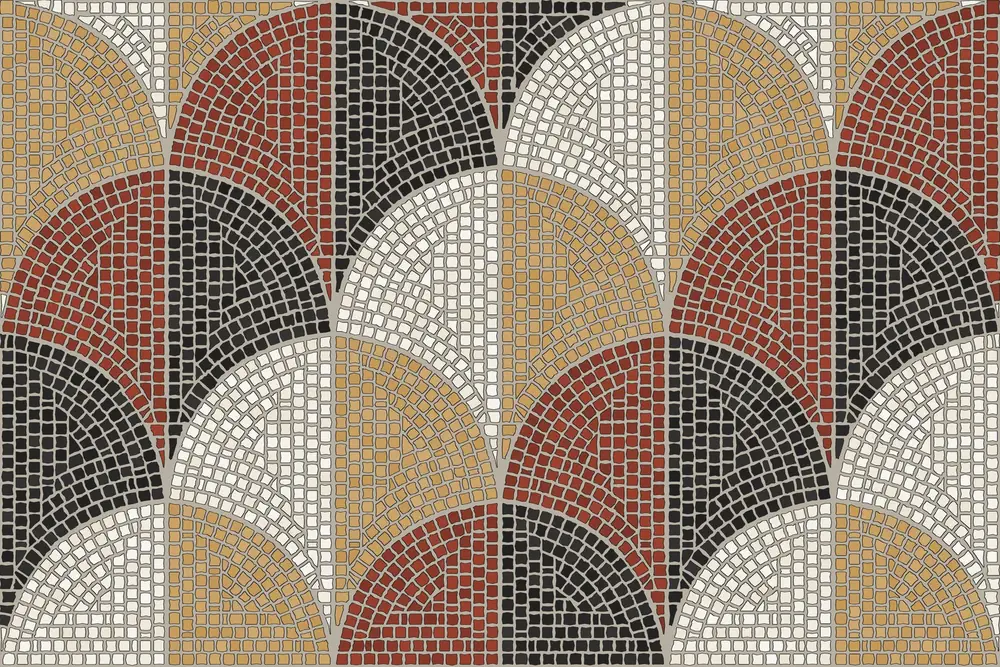
- Whole — a calm field with a large rhythm: a background for lettering or a figure, a pool, a bathroom, large areas where the pattern should not compete with the furniture.
- In halves — when the field is the main picture itself: an entrance hall, a niche, a rug-like inset, a splashback. It reads best with a contrasting four (two light and two dark colours) and scales at least 15–20 tiles across.
- Both need four colours; with one or two colours there is no difference between them.
One more option is the “from the figure” background: rows flow around the picture, as in antique mosaics. It is described in the case “Mosaic from a description”.
Border ornaments
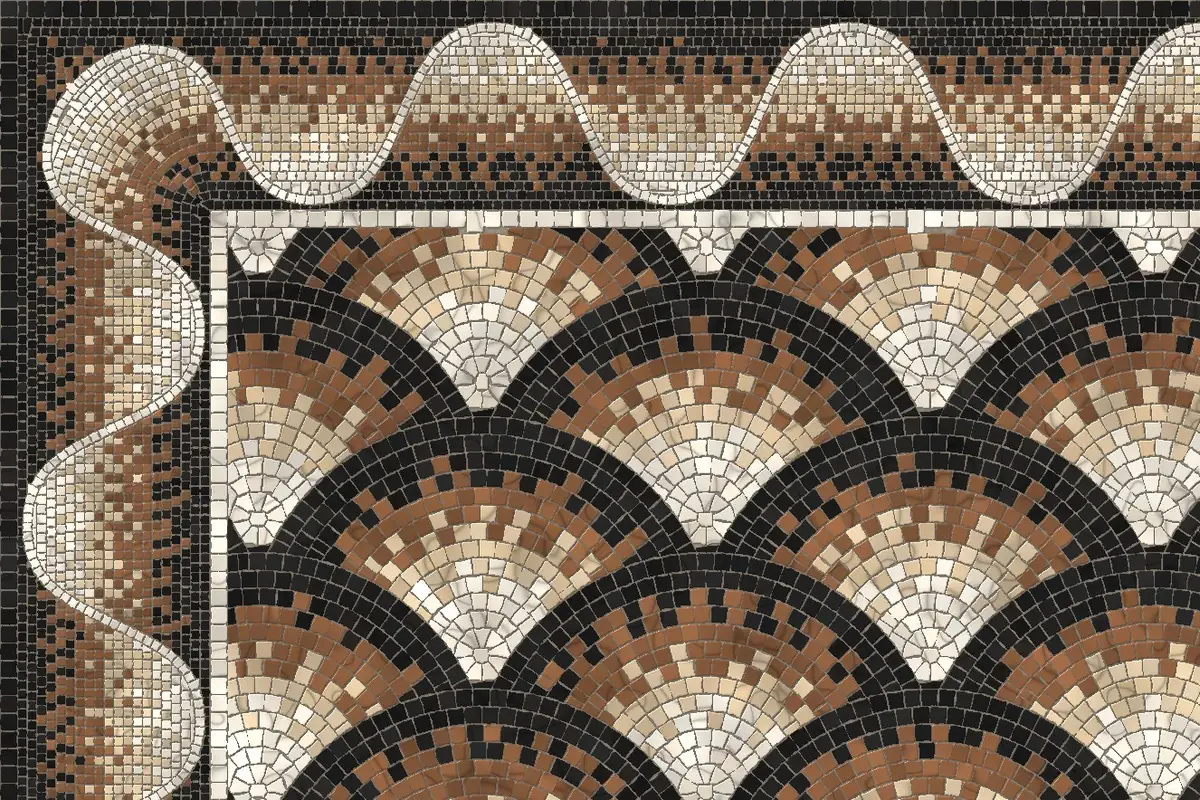
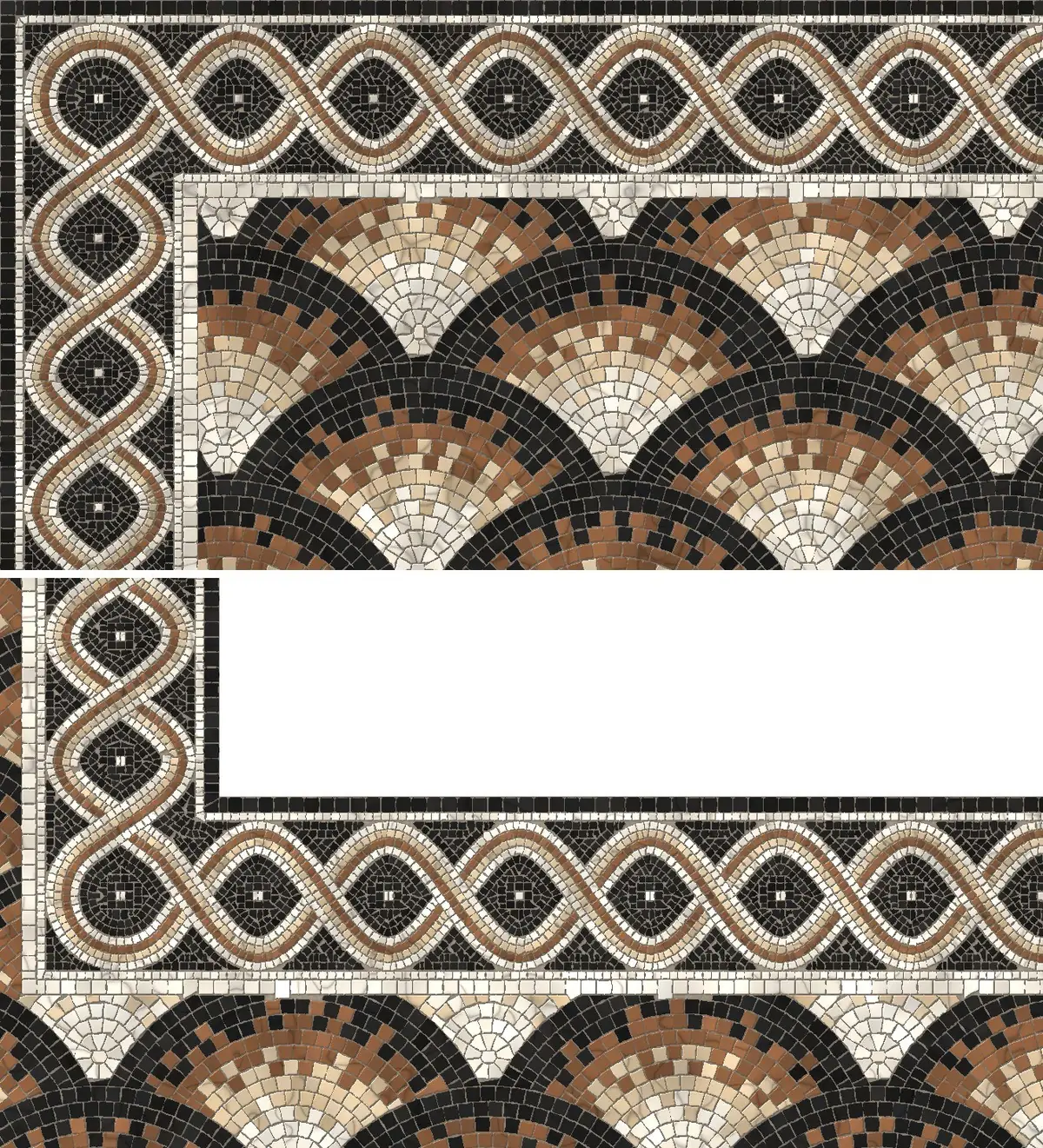
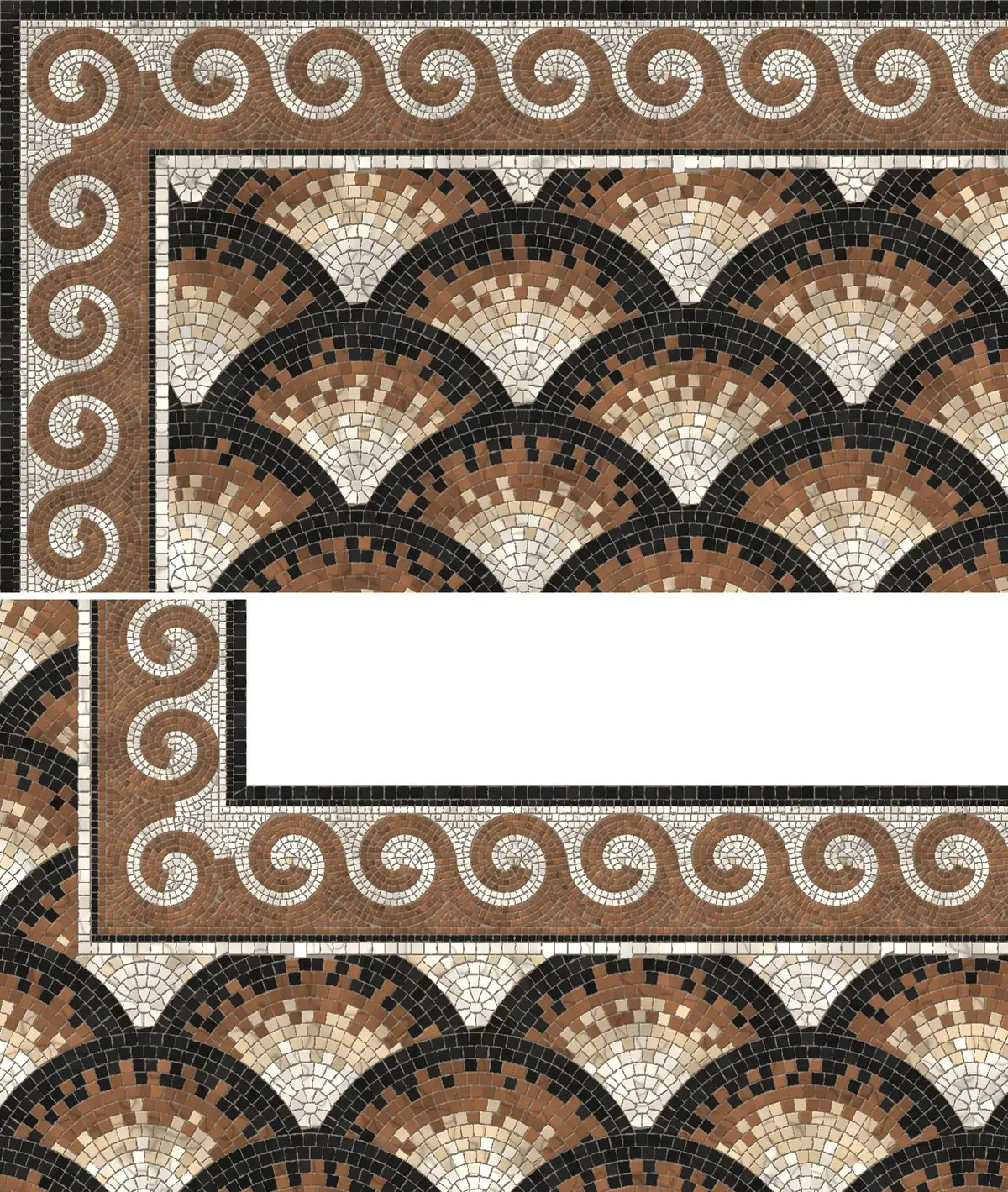
The border runs along the whole outline and comes together at the corners: the meander, teeth, dentils, chequer band and zigzag fit a whole number of motifs on each side with a square at the corner; the braid makes a loop at the corner; the wave rounds the corner without a break. The braid, wave and running wave go around a circle and along room walls with projections; the meander and the other “square-based” ones go along straight sides and around a circle. A border can be made of several bands.
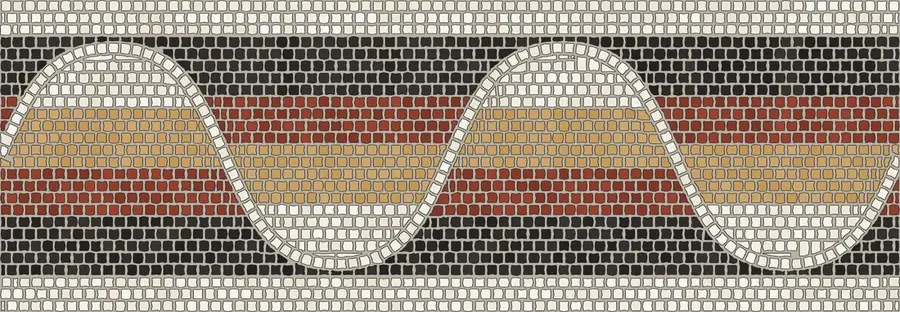
Wave
A wave line; on both sides the rows change tone.
Height: from 20 rows of tiles (20–24 cm with 10 mm tiles)
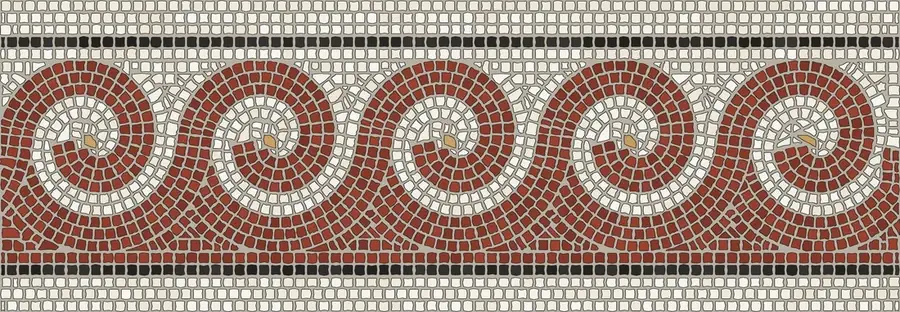
Running wave
A row of spiral crests.
Height: 16–20 rows
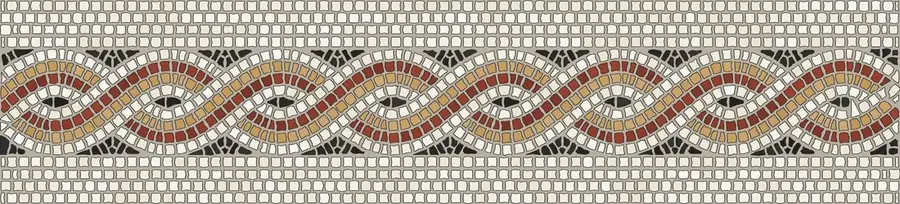
Double braid
Two interlaced strands close together, a dot in the middle of each loop.
Height: 9–12 rows (11–14 cm)
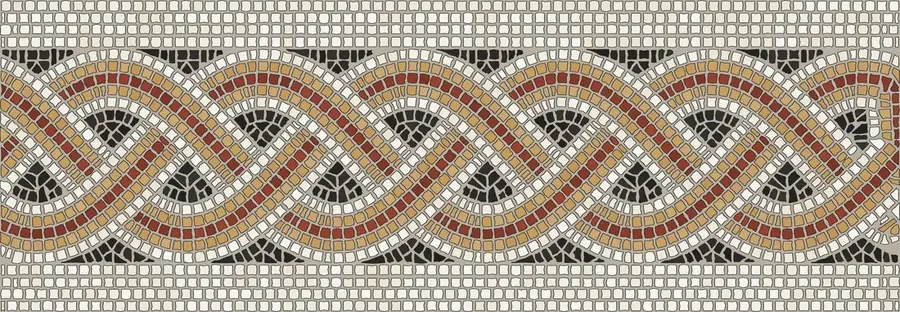
Triple braid
Three interlaced strands.
Height: about 20 rows
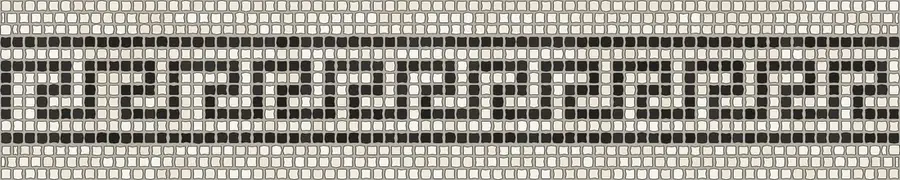
Meander
The Greek key — one continuous hooked line.
Height: 9 rows; 14 for a line two tiles wide

Simple meander
A “battlement”: the line goes up — right — down — right.
Height: 7 rows

Teeth
A row of stepped triangles from a line at the edge.
Height: 6 rows

Dentils
A line and alternating squares.
Height: 3 rows

Chequer band
A chequered band two squares high.
Height: 4 rows

Zigzag
A broken line from edge to edge.
Height: 8 rows
What changed: the double braid’s strands now run close together, as in Roman borders; before, a dark area was left in the middle of each loop.
Border corners
Geometric figures for the centre
Each part of a figure is laid in rows along its own outline — petal by petal, diamond by diamond. The figure goes into a medallion or a panel.
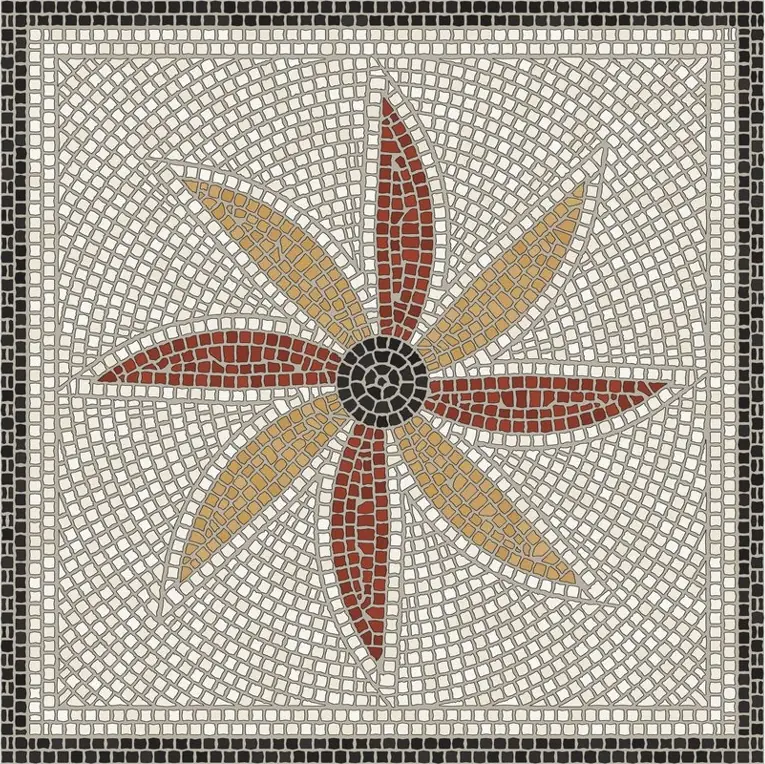
Rosette
Petals around a centre; the number of petals is up to you.
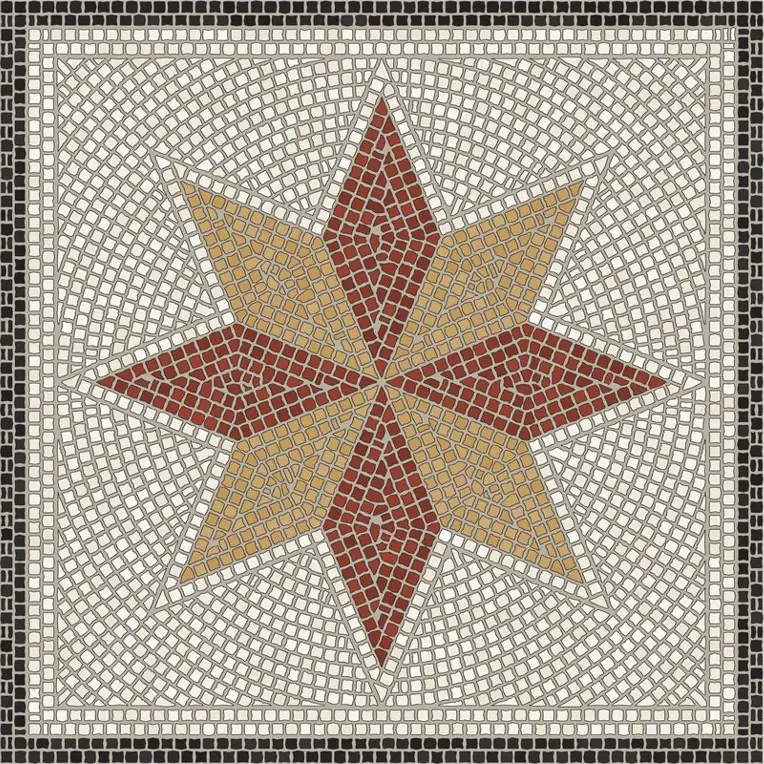
Star of diamonds
Diamond rays in two colours.
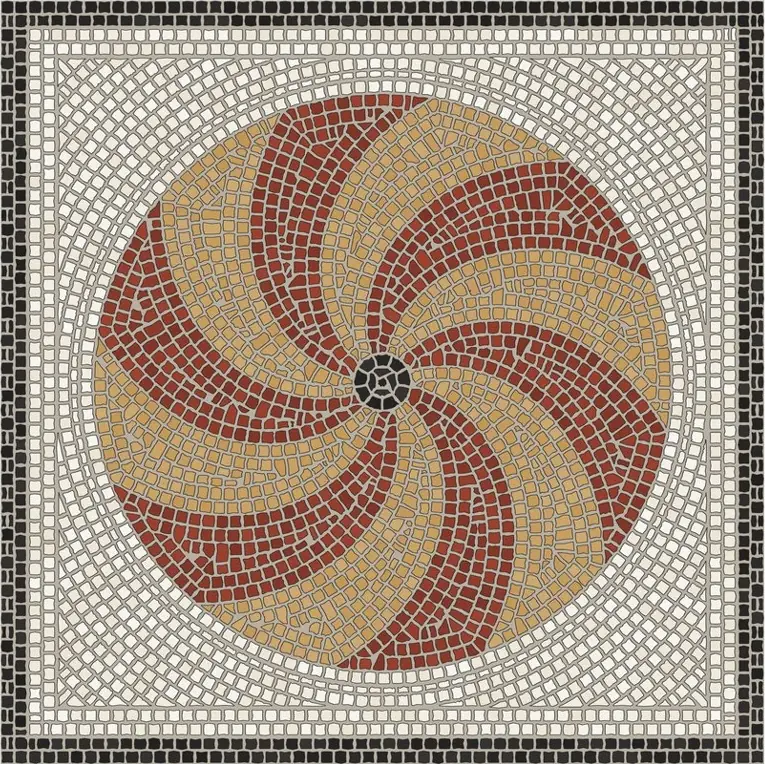
Whirl
Curved blades in two colours.
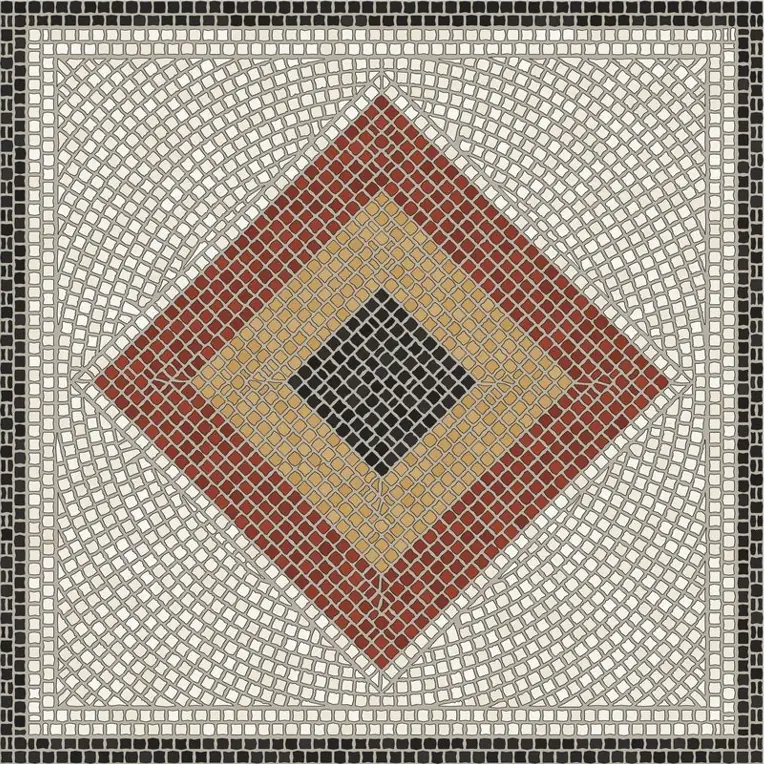
Nested diamonds
A diamond within a diamond.
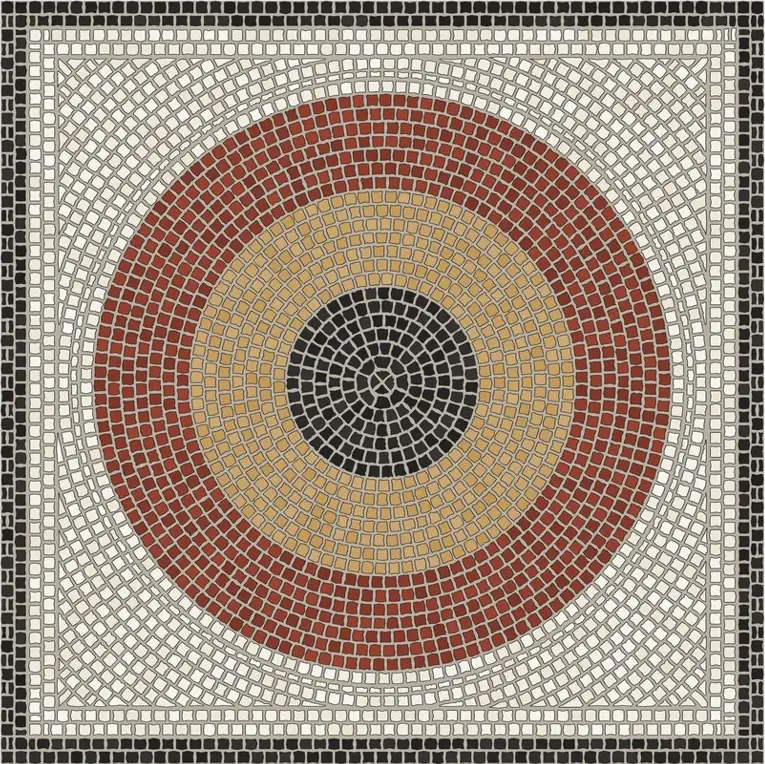
Nested circles
A circle within a circle.
How a floor comes together
A Roman geometric floor is three things: a border around the edge, a field in the middle and, if needed, figures on the field. Studio builds the whole floor from such a description: border bands from the edge inwards, the field pattern, a medallion (circle, square, diamond, octagon) with its own border and figure, or a grid of panels, each with its own pattern.
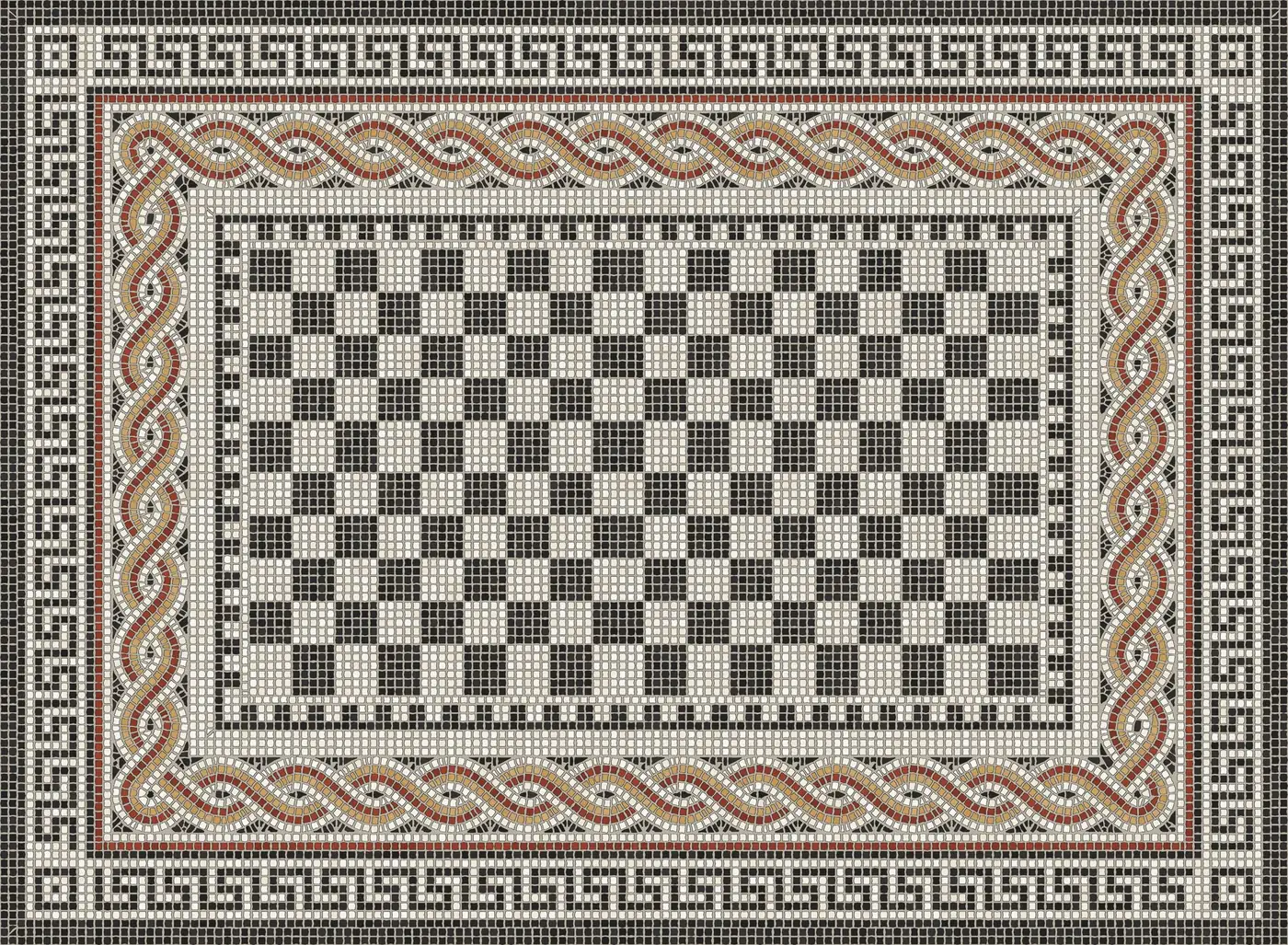
Border and chequerboard · 1.8 × 1.3 m
Border: meander, line, braid, line, dentils; the field is a chequerboard.
Medallion · 1.8 × 1.8 m
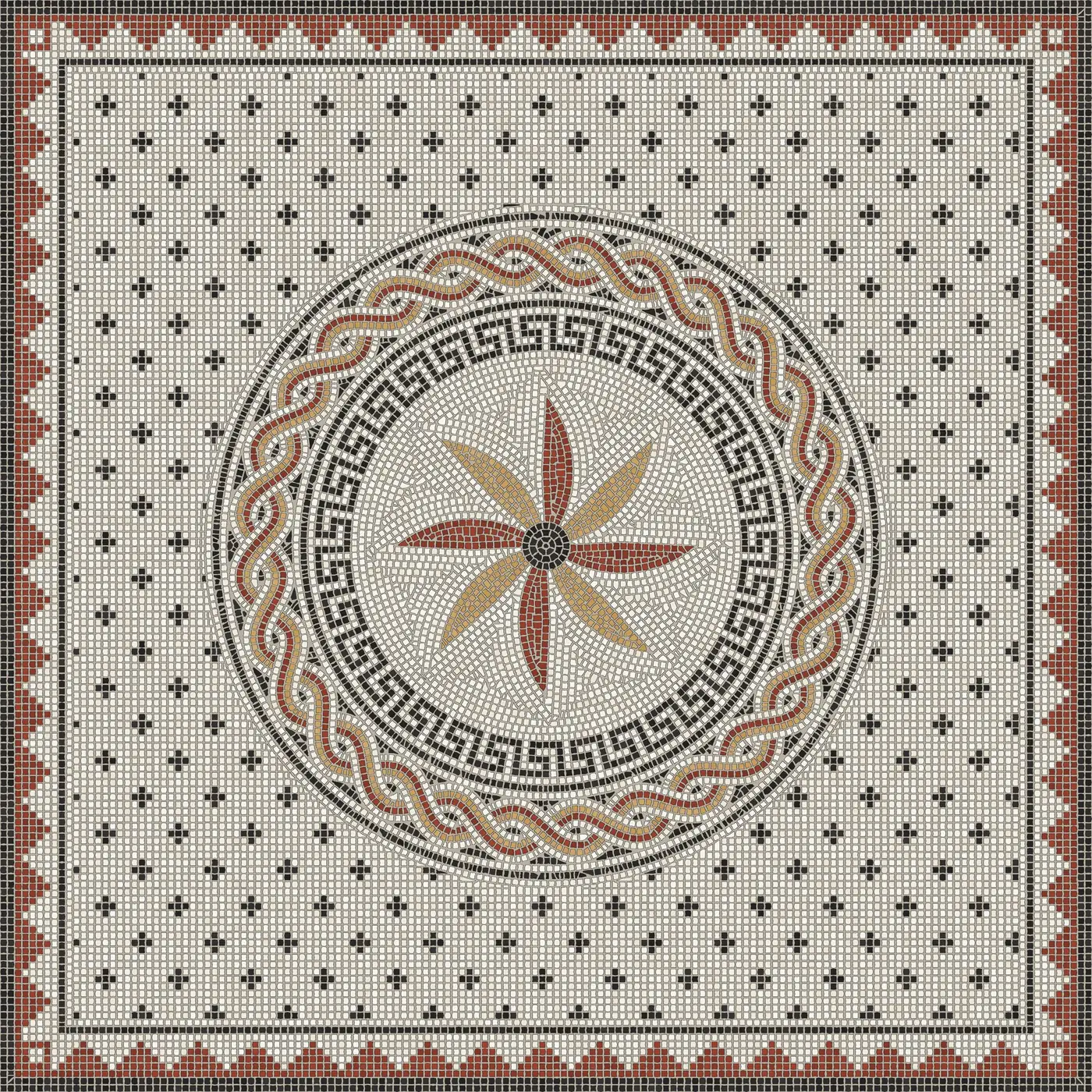
Border: teeth; field: crosses; a round medallion with a braid and a meander in a circle, a rosette in the centre.
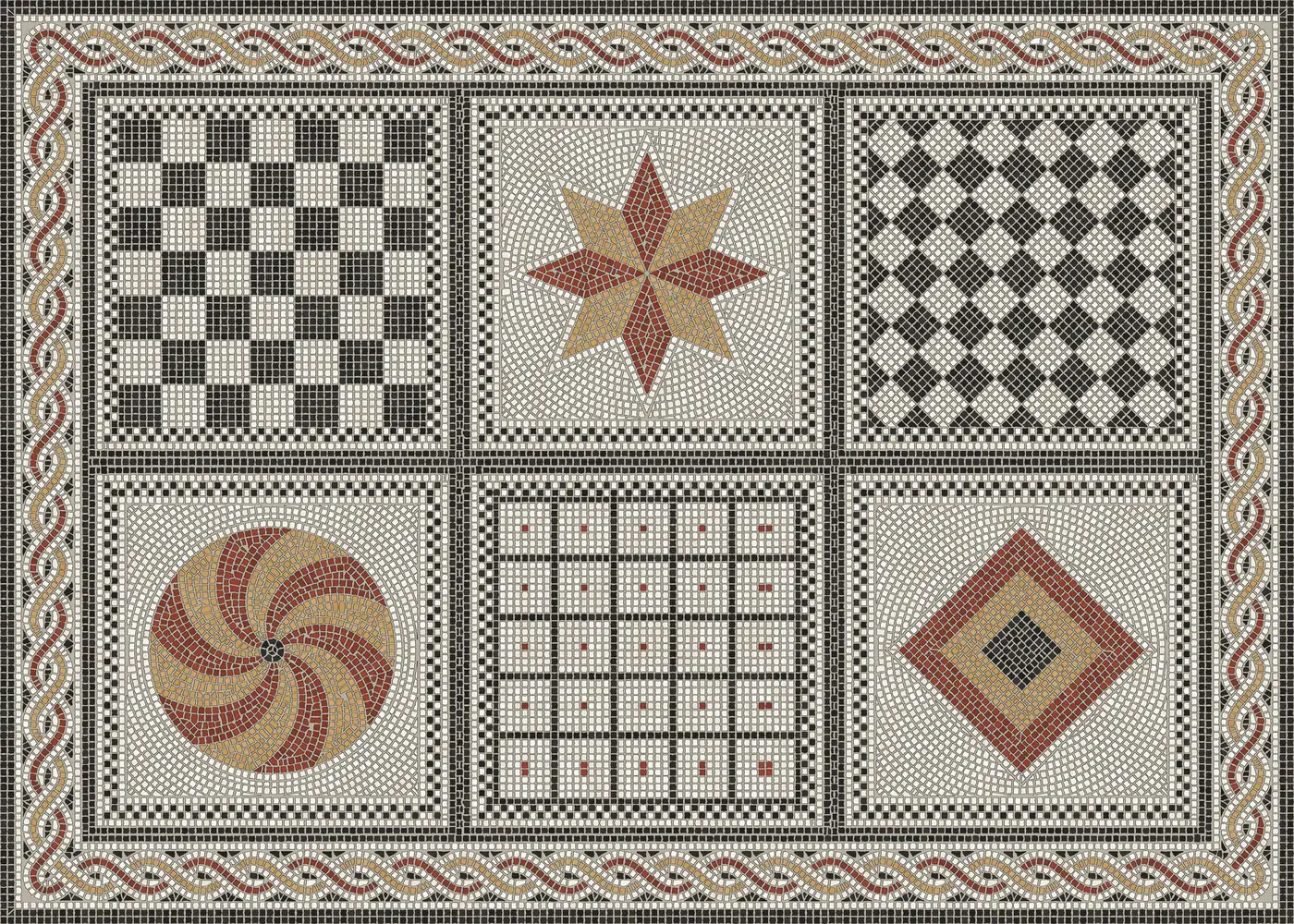
Panels · 2.1 × 1.5 m
Border: braid; six panels framed in a chequer band: chequerboard, star, diamonds, whirl, lattice, nested diamonds.
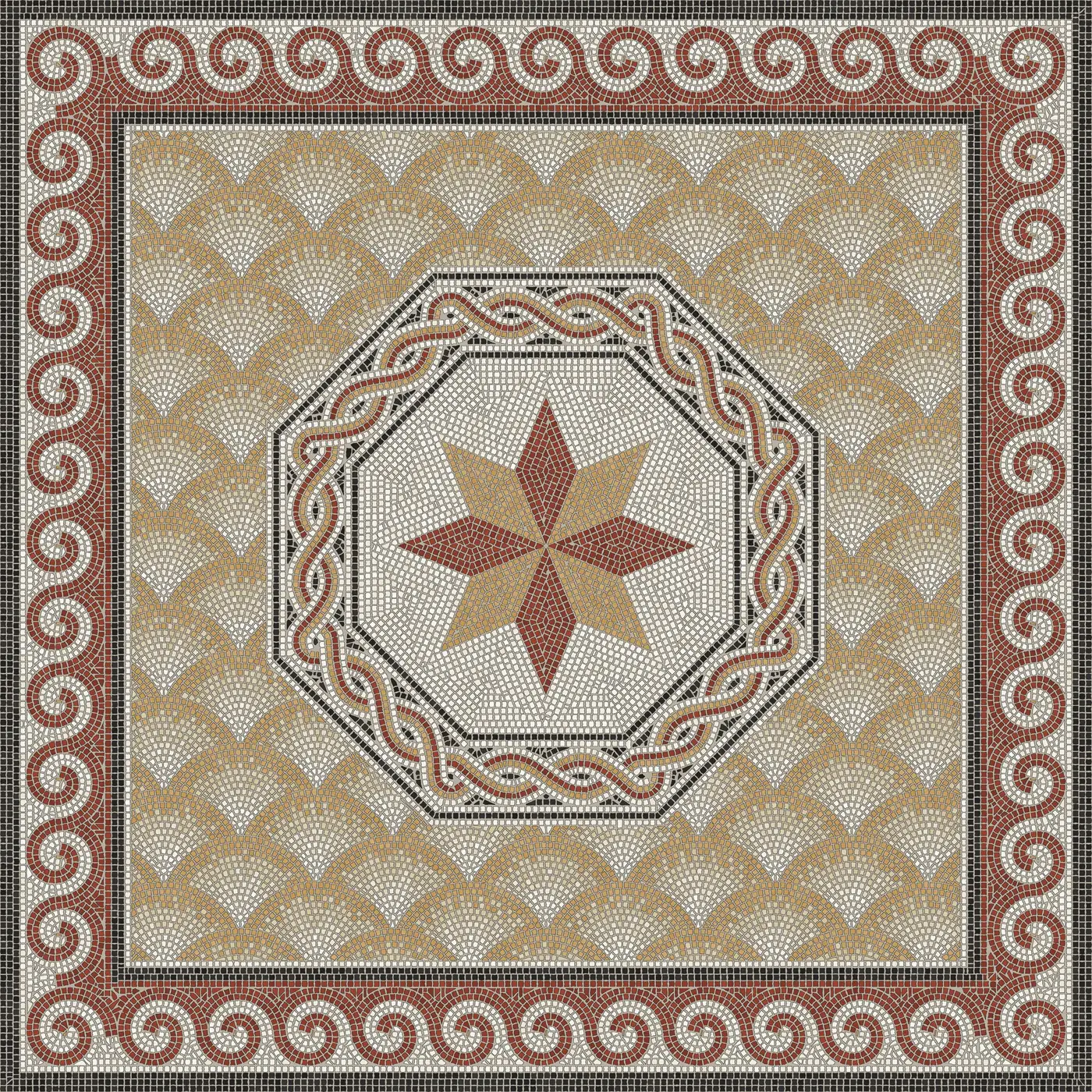
Fan and octagon · 2 × 2 m
Border: running wave; field: fan with a smooth colour transition; an octagonal medallion with a braid and a star.
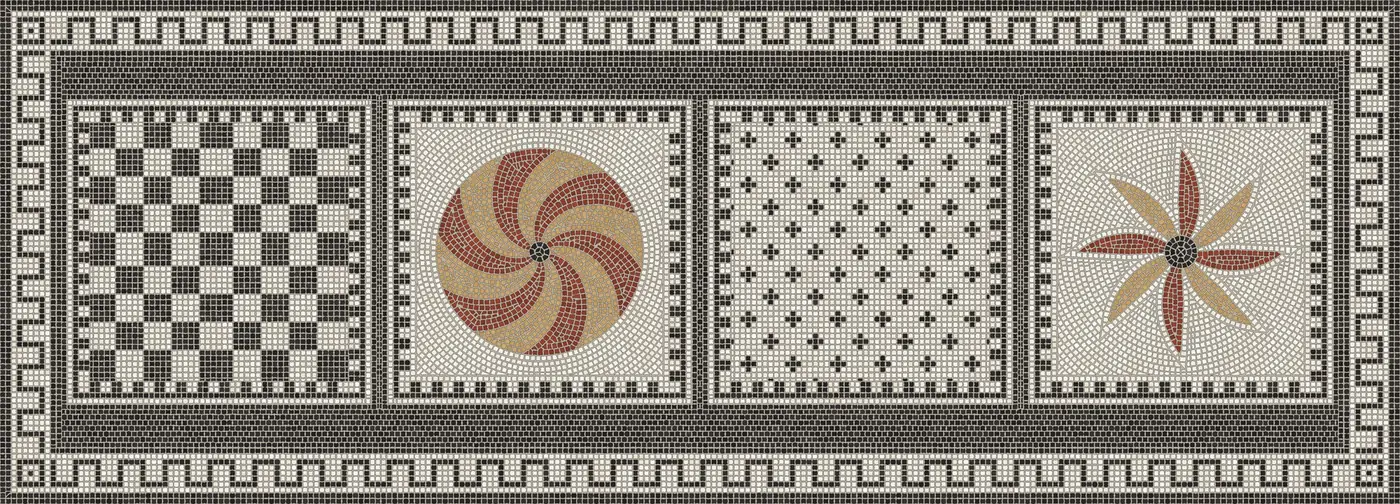
Corridor · 3 × 1.08 m
Border: simple meander; four panels in a row with dentils.
A villa on the map: the patterns across a whole house
How the patterns in this guide work together can be seen on ANDAMENTO MAP, an interactive map of a villa in the Roman manner. Every floor in the house was laid out in ANDAMENTO Studio, and any of them can be zoomed in to a single stone.
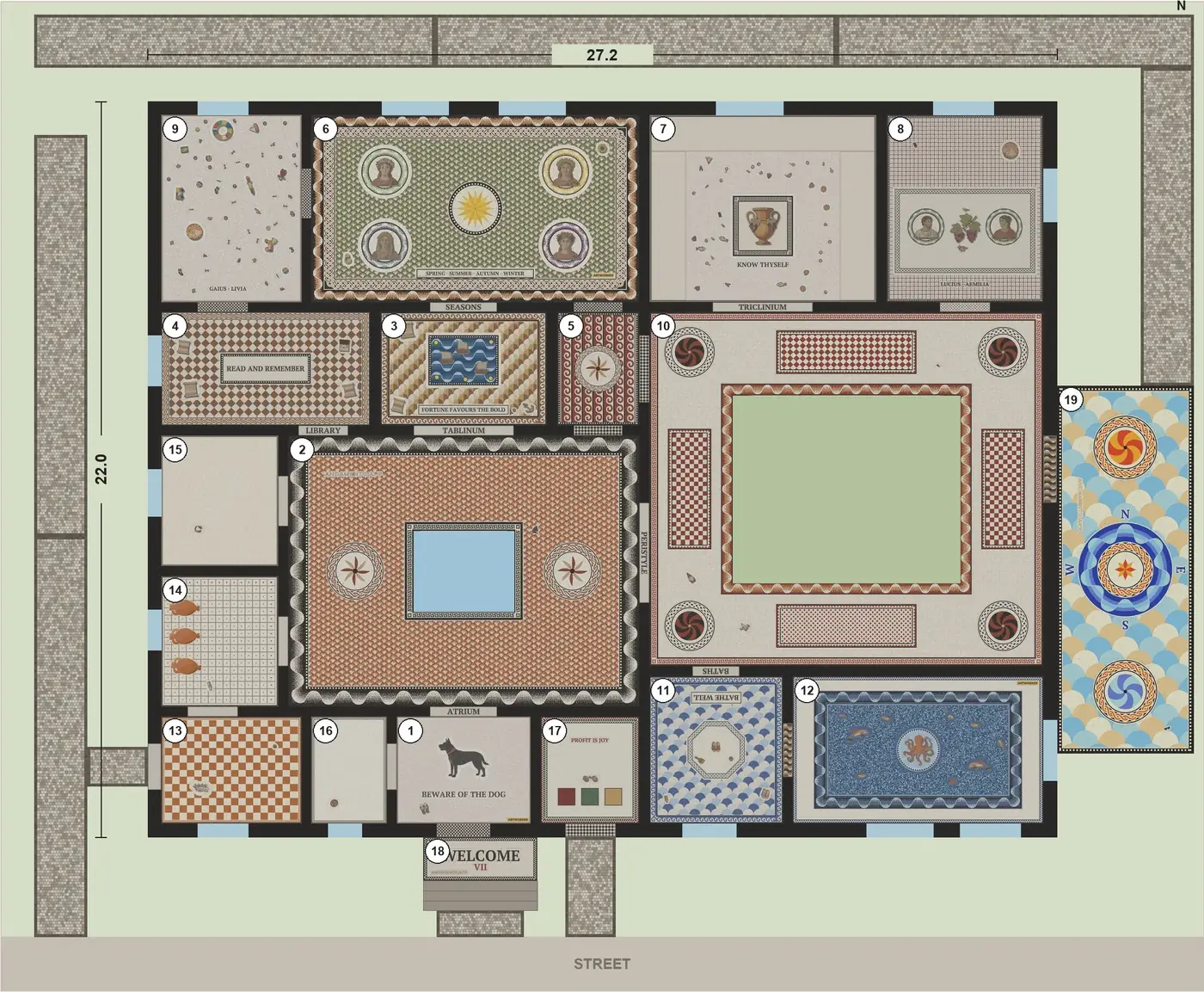
- 20 rooms, 22 thresholds and 9 paths — 654.8 m² of mosaic, 1,836,594 tesserae, about 22 t of material.
- Materials: marble, MELTI smalti, glass tiles, cobblestones on the paths, brass in the signatures.
- The floors use the borders, fields and medallions from this guide: chequerboards, grids, a fan, braids and waves. The tablinum has scales in halves, the changing room has them whole, the children’s room has an “unswept floor”.
- A tour of the house, a description of every room, Russian and English; no sign-up.
- The “I want this floor” button in a room writes to the workshop with the name of the floor you liked.
Recommendations
Confirmed by trials.
| Topic | Rule |
|---|---|
| Border bands | separate the ornaments with a plain line one or two rows wide: two patterns side by side merge |
| Band order | outside — a large, calm ornament (meander, wave), nearer the field — a small one (dentils, chequer band); the braid goes between them or around the medallion |
| Colours | three or four for the whole floor: light stone, a dark line, one or two colours; the same in the border and the field |
| Medallion | from half to two thirds of the shorter side of the field; the figure inside is about 0.4 of its inner size |
| Tile | one for the whole floor: 10 mm for floors from 1.2 m, 12–15 mm from 2.5 m |
| A small floor | a wave needs 20 rows of height, a meander or braid needs 9–11 — on a small floor the border is made of them |
Not yet
- Plant borders — ivy and acanthus.
- The Solomon’s knot and other interlace emblems.
- A “carpet” field of stars and diamonds, a field of cubes.
- Square-based borders (meander, teeth) on an octagon — use a braid or a wave there.
ANDAMENTO Studio opens soon
Leave your email and we will write once, on opening day.