
Five laying techniques
Pick the technique with an icon in the Tile window — “Technique”. Set it for the whole panel or separately for a layer, the background and the frame. Palettes in the Palette window are grouped by technique: picking a card sets both the palette and the technique.
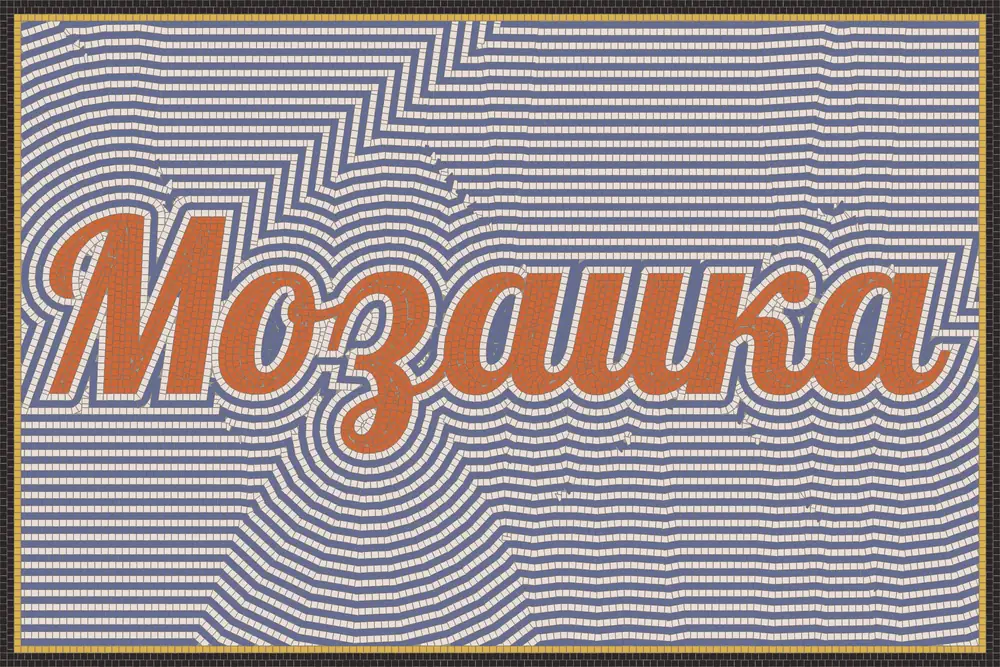
Andamento
Rows by the mosaicist's rules: tiles are trimmed, rows follow the drawing. Rows grow from the shape's skeleton inward and outward into the background; neighbouring rows are staggered, tiles are full width.
- Tile, mm: 10×10, 12×12, 15×15, 20×20, 24×24, 48×48, 10×17 (10×17 is elongated and runs along the row like wagons)
- Joint, mm: 0, 0.5, 1, 1.5, 2, 3, 4, 5
Trencadís
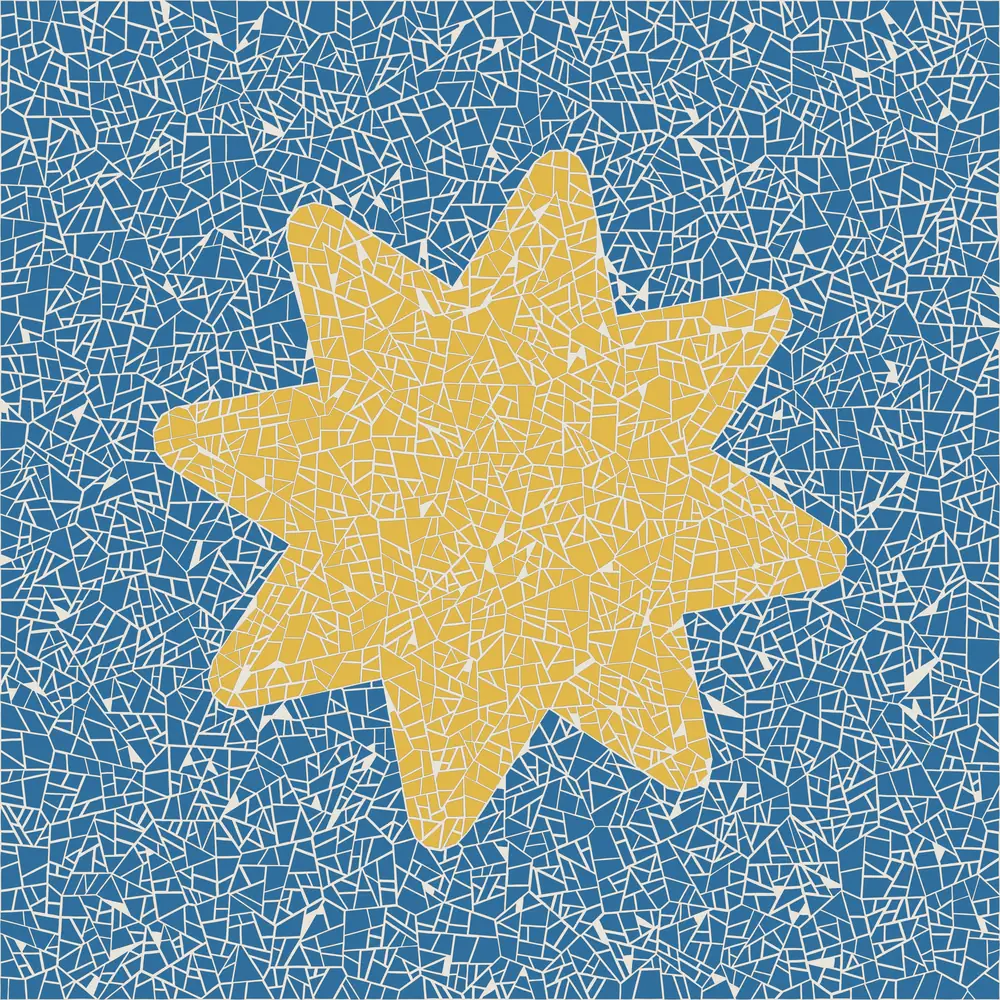
Tile broken in place: shards with a floating grout line, as Gaudí did. The field is split into plates, and plates are struck with straight blows down to shard size; each shard has its own joint.
- Piece, mm: 10×30, 20×40, 30×60, 40×90, 50×150, 80×200, 150×300, 250×400, 400×400
- Joint, mm: 0–1, 1–3, 2–5
Matrix
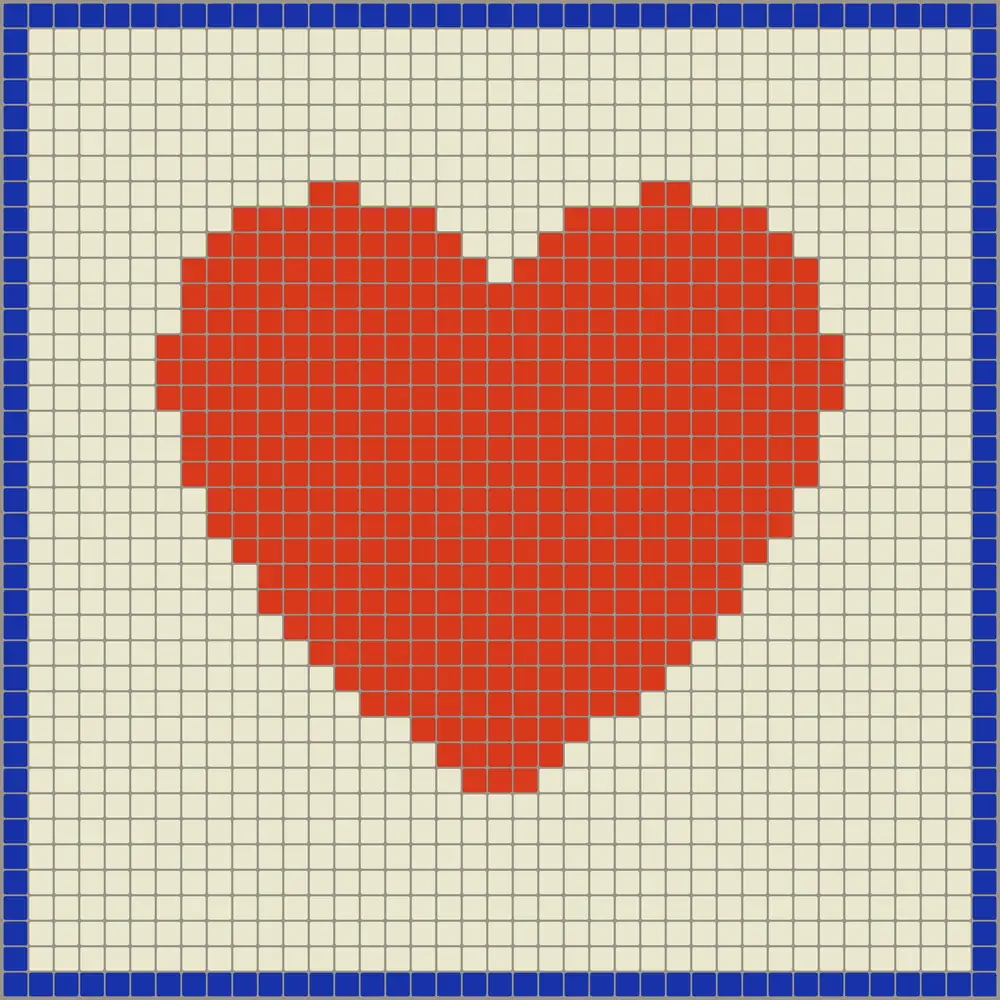
Whole tiles on the canvas grid; the edge comes out stepped. One grid for the whole panel, step = tile + joint. A cell goes to the part that covers at least the set percentage of it.
- Tile, mm: 10×10, 12×12, 15×15, 20×20, 24×24, 48×48, 10×17
- Joint, mm: 0, 0.5, 1, 1.5, 2, 3, 4, 5
- Cell taken from, %: 10–100, default 50
Stained glass
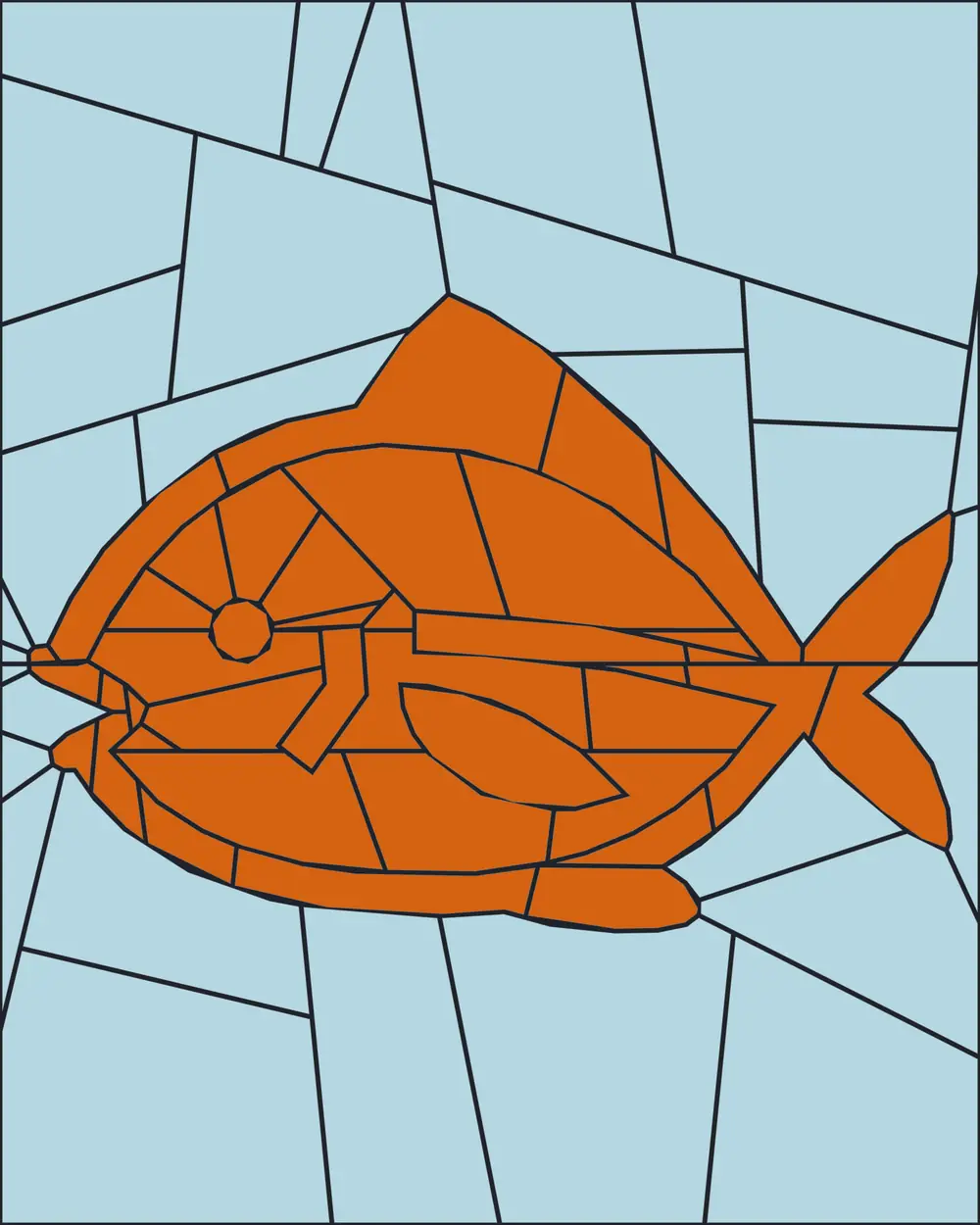
The drawing is cut into glass pieces and soldered with foil (Tiffany method). Cutting rules: no inner corners, deep concave arcs are cut with a chord, rings are cut through the hole, large pieces are split across, slivers merge with a neighbour. Every piece is shrunk by half a joint for the foil.
- Piece, mm: 10×30, 20×40, 30×60, 40×90, 50×150, 80×200, 150×300, 250×400, 400×400
- Joint, mm: 0–1, 1–3, 2–5 (foil with solder)
Contour cut
No paving: the shape stays whole and is cut along its outline — an inlay of metal, wood, concrete or plastic. The part is shrunk by half a joint, and the material has its own texture: brushed metal, wood grain, concrete grain, plastic gloss.
- Materials: metal (steel, stainless, brass, copper, blackened steel), wood (oak, ash, walnut, wenge, birch), concrete, plastic

Different techniques in one panel
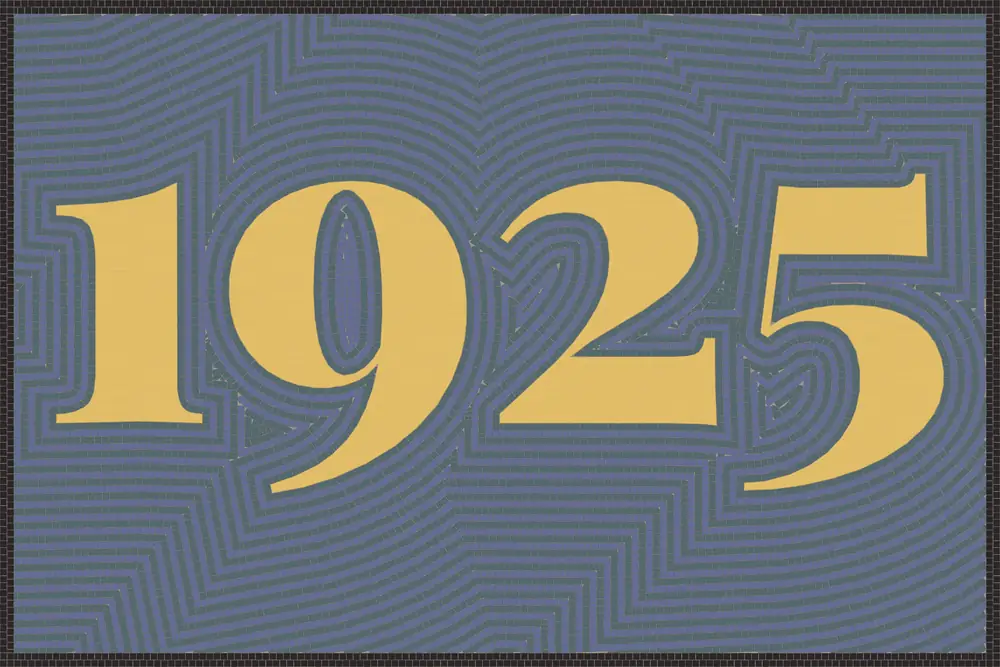
The style button on a layer (“Same style as the panel” / “Layer style”) gives it its own palette, technique and tile. Here brass numerals are laid as a contour cut into an andamento smalto background — the background rows flow around the inlay.
In the matrix technique, layers of different techniques share one grid: neighbouring techniques wrap around the matrix layer's steps.
Try it on your own panel
ANDAMENTO WEB runs in a desktop browser with a PRO subscription. For a sketch from your phone, use the mobile app — 10 free credits when you sign up.